CHJ Plaza in Shantou
Cultural and Urban Catalyst in the Haojiang District
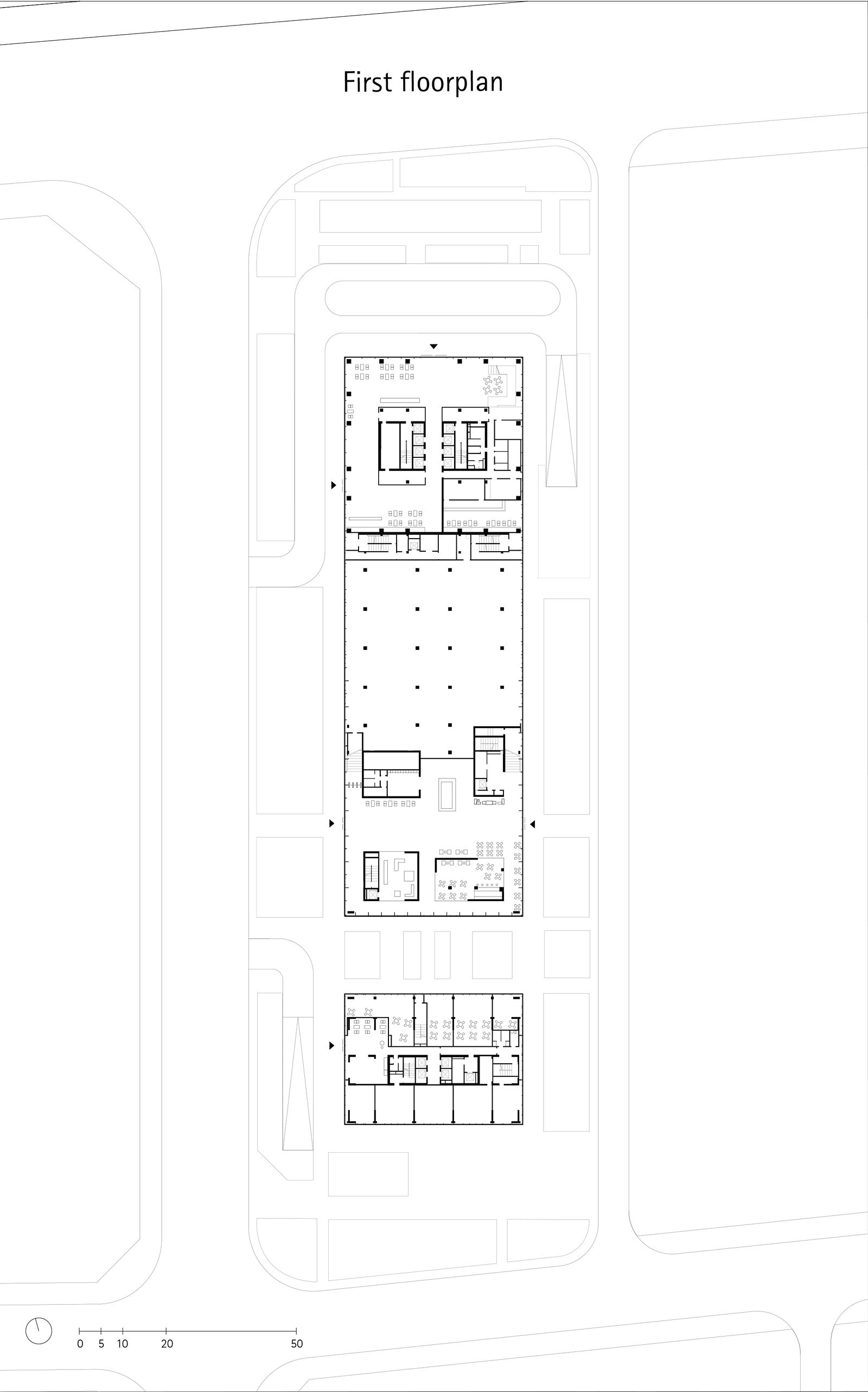
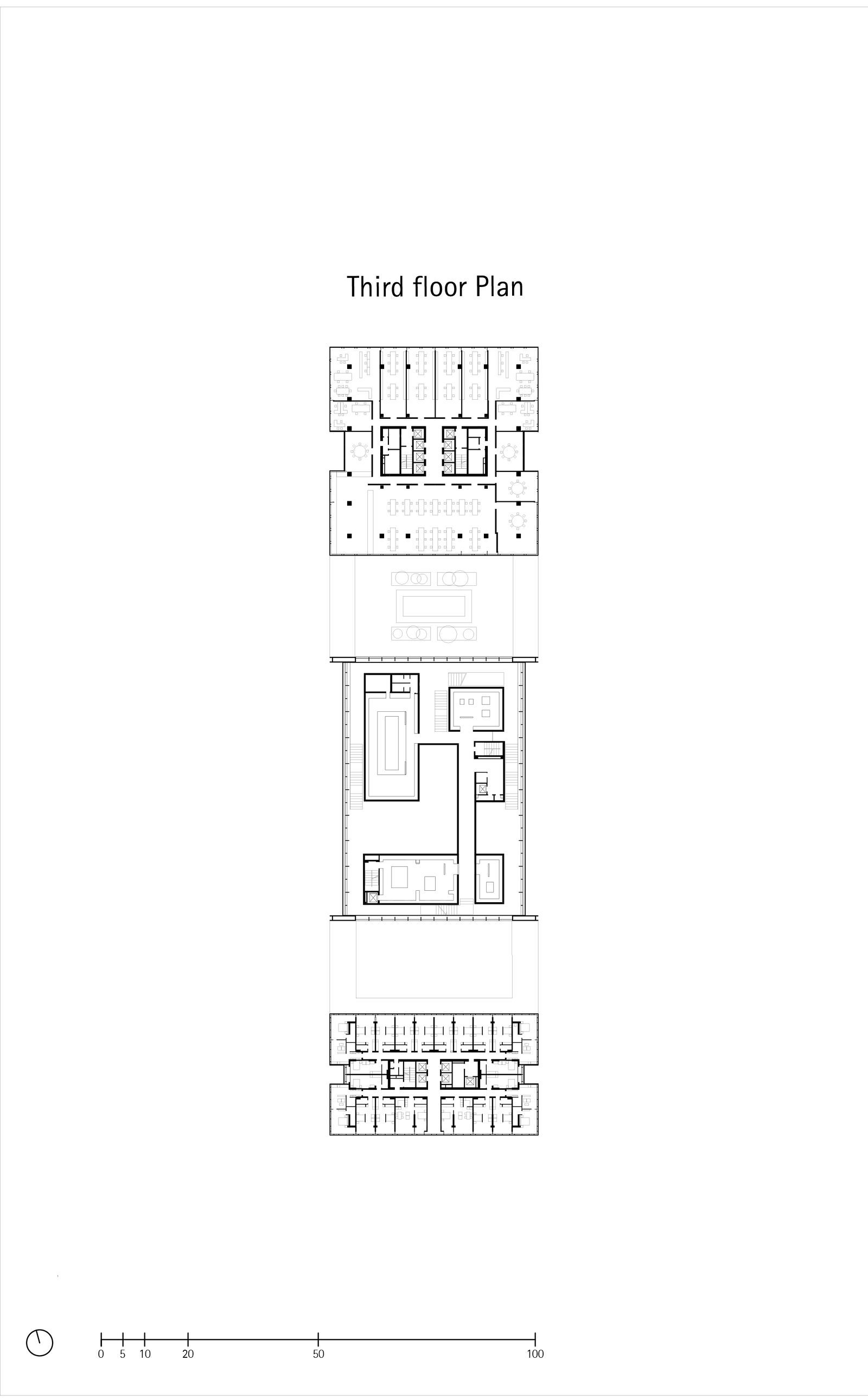
The CHJ Plaza, located at the heart of CITIC Binhai New Town in the Haojiang District of Shantou, adds a major cultural and urban development impulse to the district’s growth corridor. Designed by architects von Gerkan, Marg and Partners (gmp), the new headquarters complex for the jewelry manufacturer combines public and private uses in a mixed-use ensemble comprising an office tower, museum, and residential tower. Open ground-floor zones and a publicly accessible foyer weave the development into the surrounding neighborhood and connect it directly to the waterfront cultural axis.
Shantou lies in the Han River Delta in eastern Guangdong Province. On the bay’s southern shore — opposite the historic city center — CITIC Binhai New Town is taking shape as a multi-phase waterfront development. Its master plan blends high-density residential uses with a green, pedestrian-friendly urban structure defined by public open spaces and a filigree network of pathways linking the new residential and cultural districts both functionally and spatially.
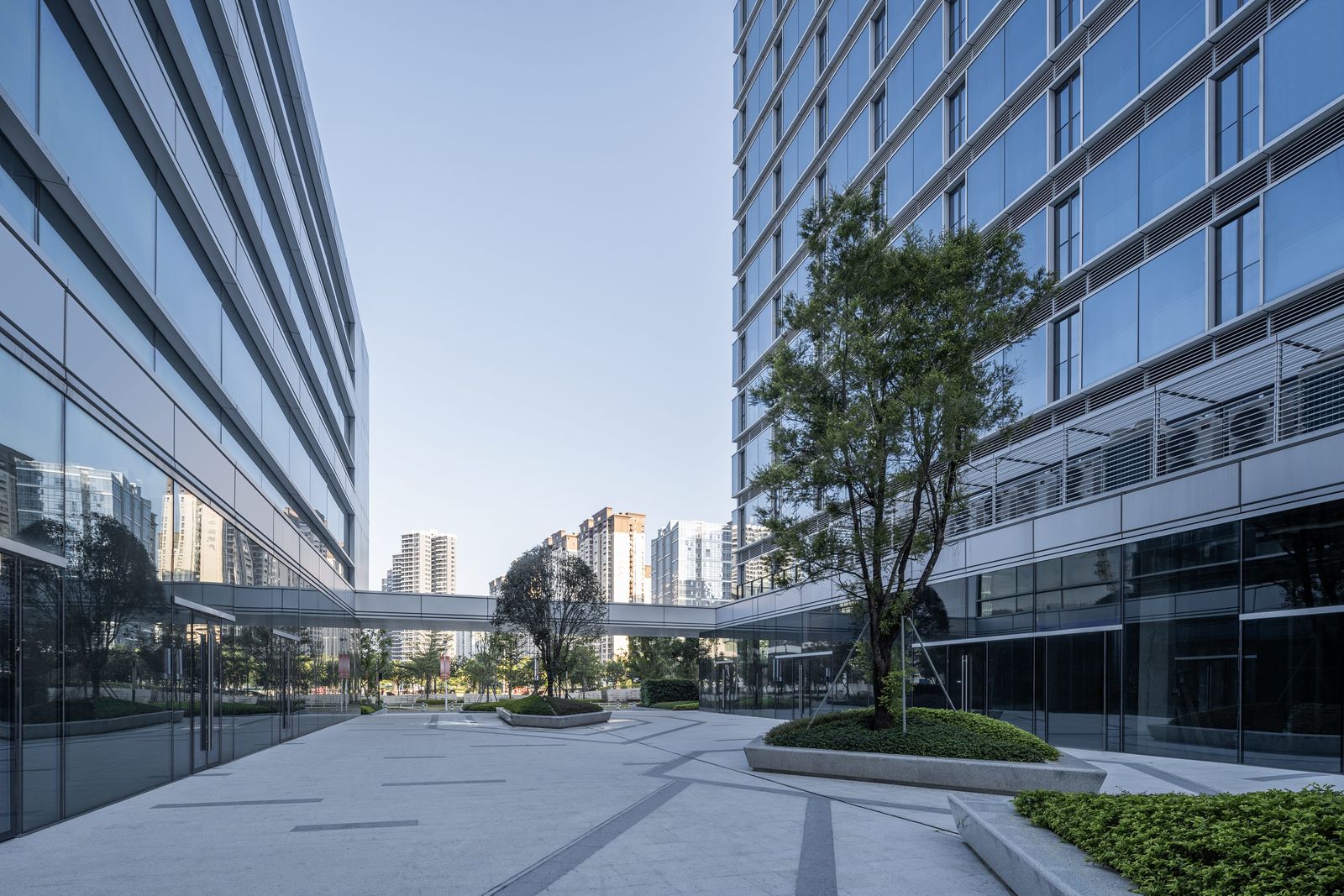
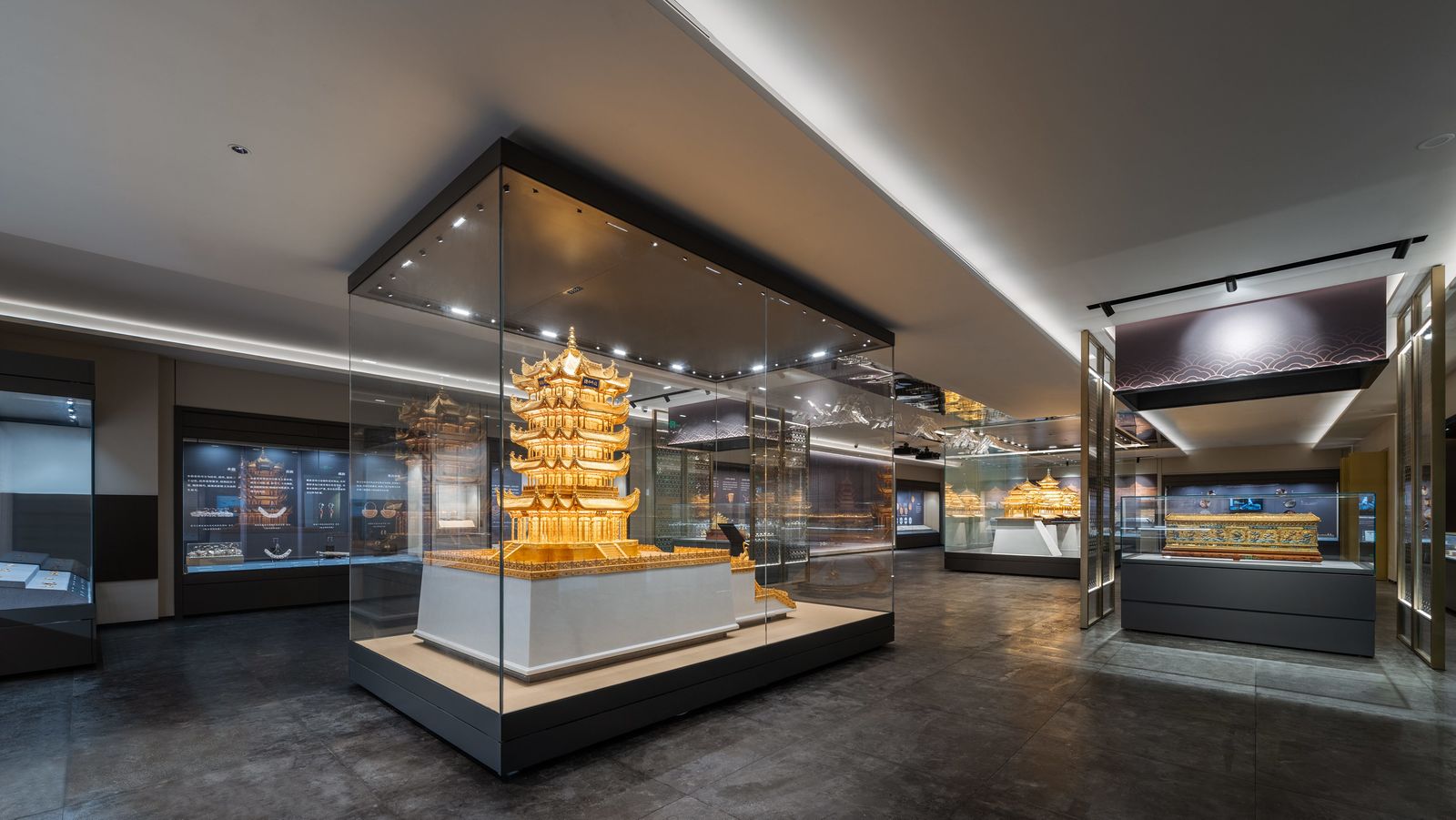
Within this context, CHJ Plaza plays a pivotal role. Together with the adjacent Chaoshan Exhibition Center to the east — showcasing key elements of the region’s material and immaterial cultural heritage — it forms the neighborhood’s new cultural center. The museum creates a public venue that opens the client’s collection of historic Chinese jewelry and gold-thread artifacts to a wider audience. At the same time, the overall complex brings together work, culture, and living in a clearly organized architectural composition.
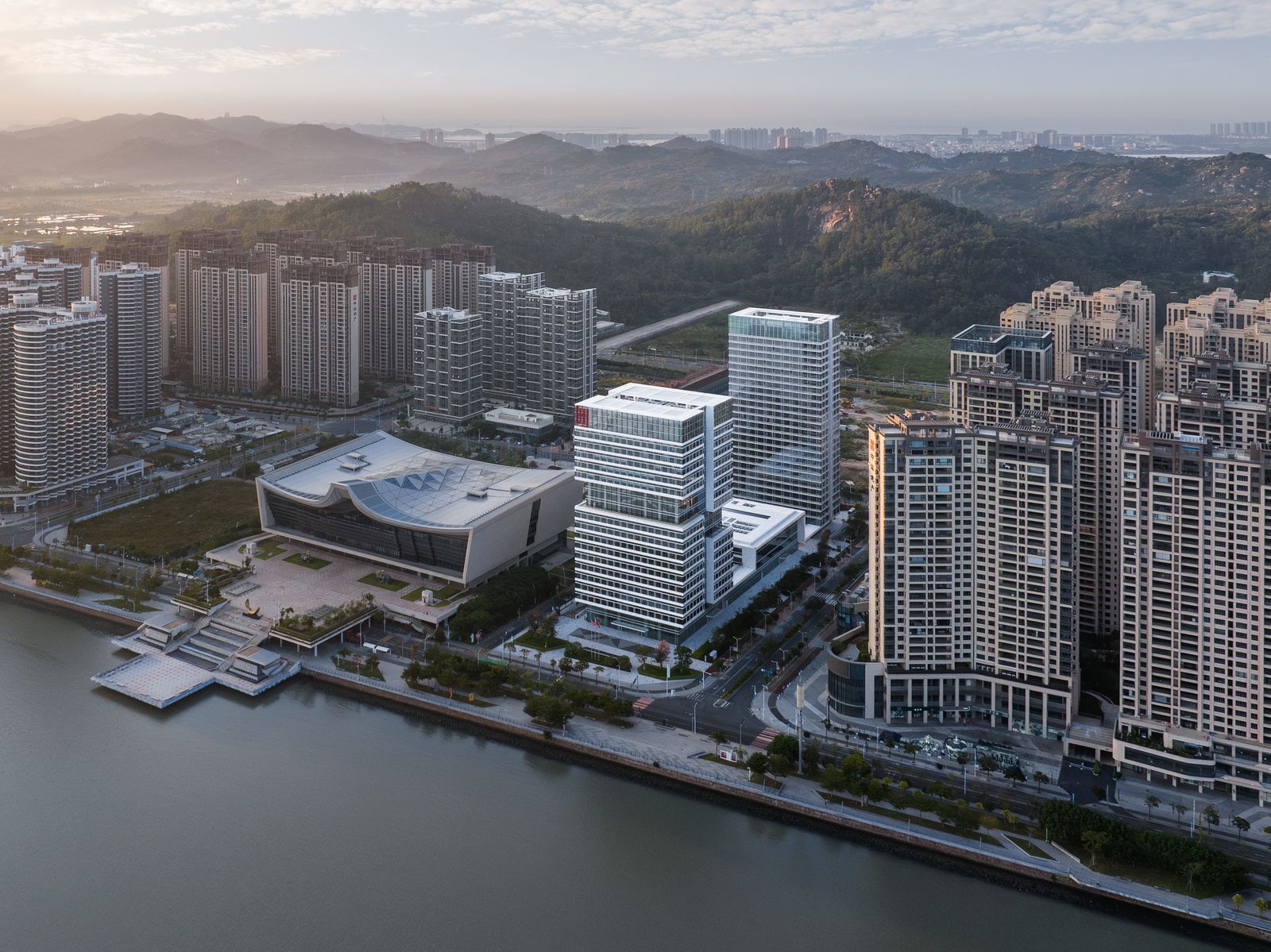
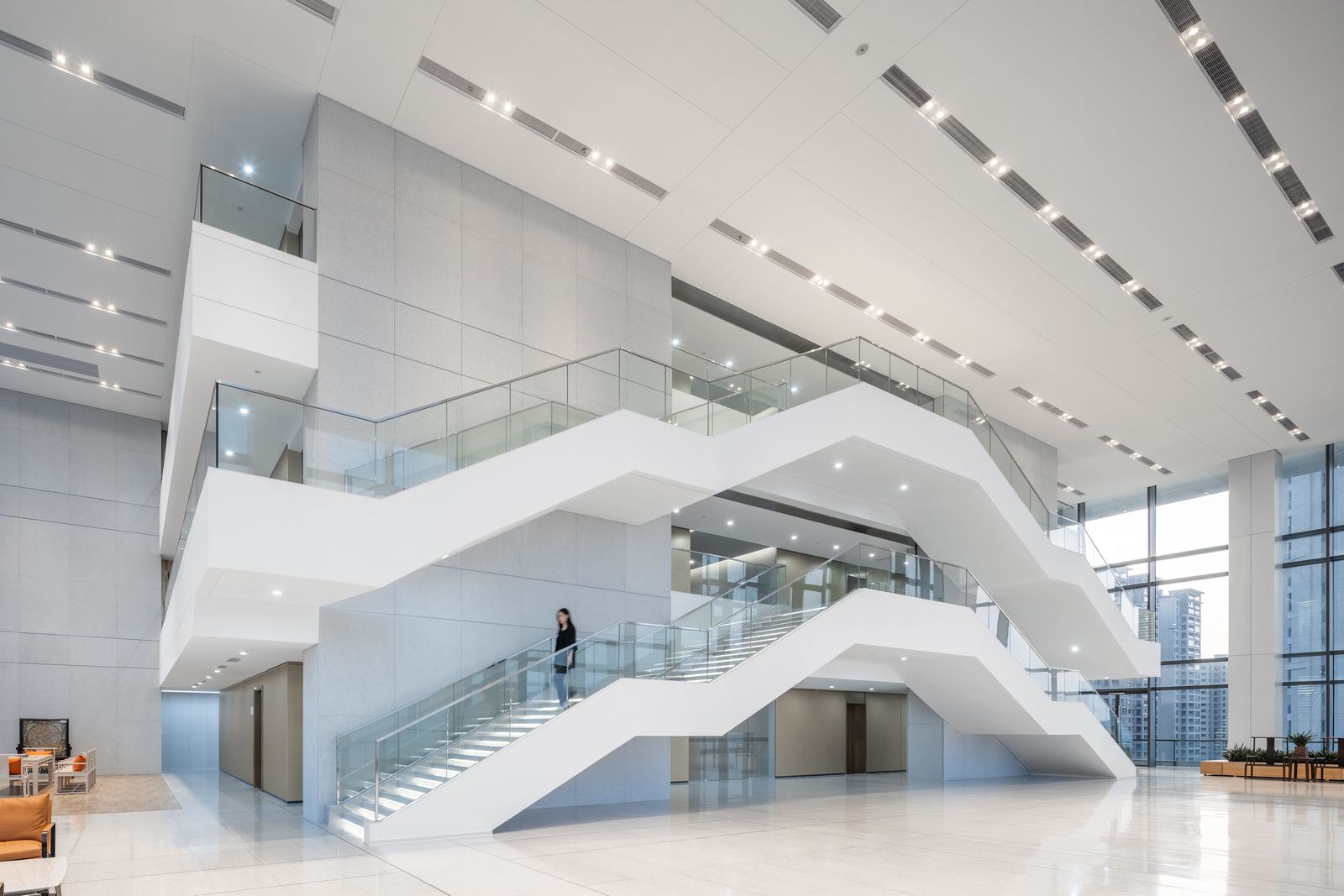
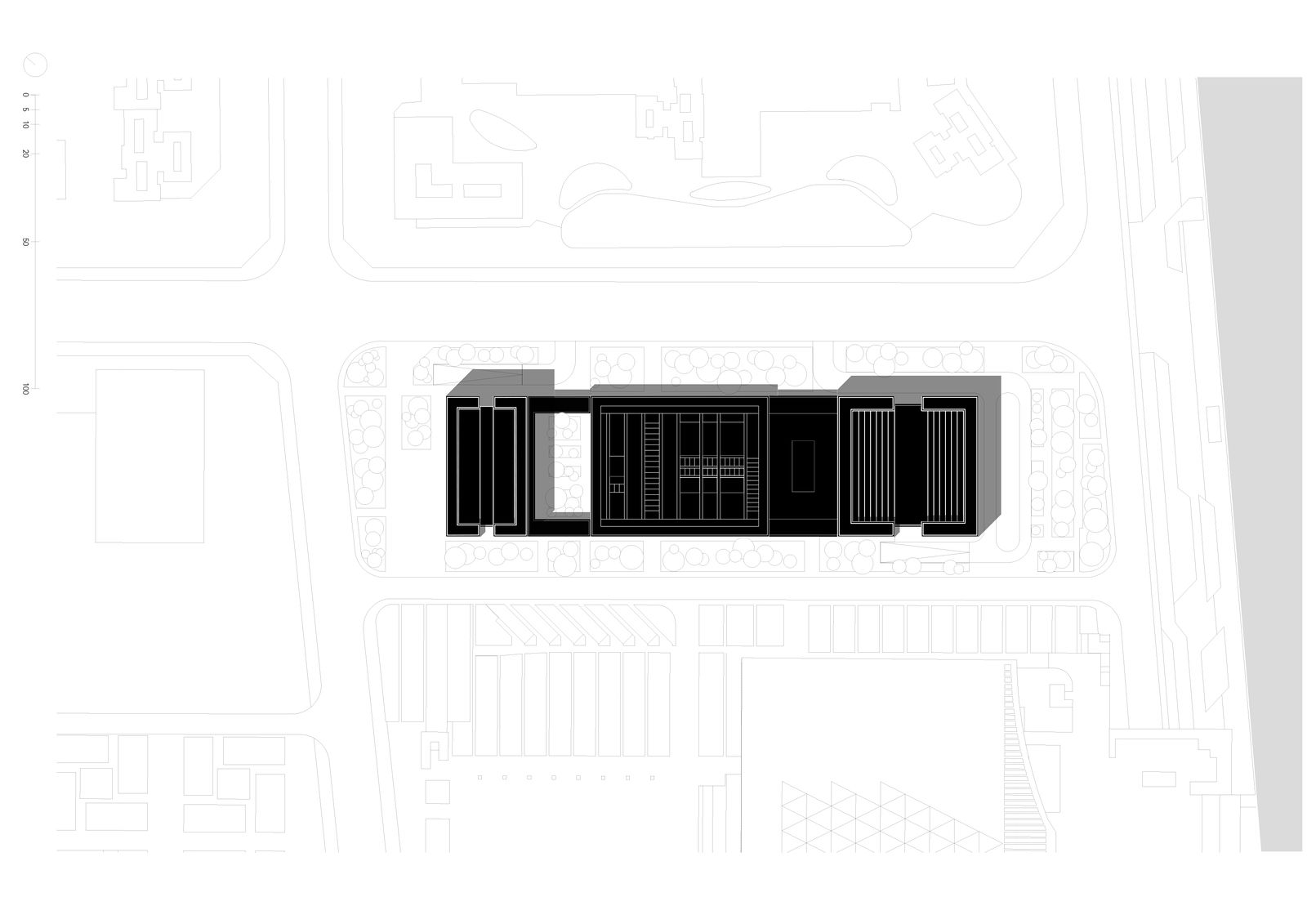
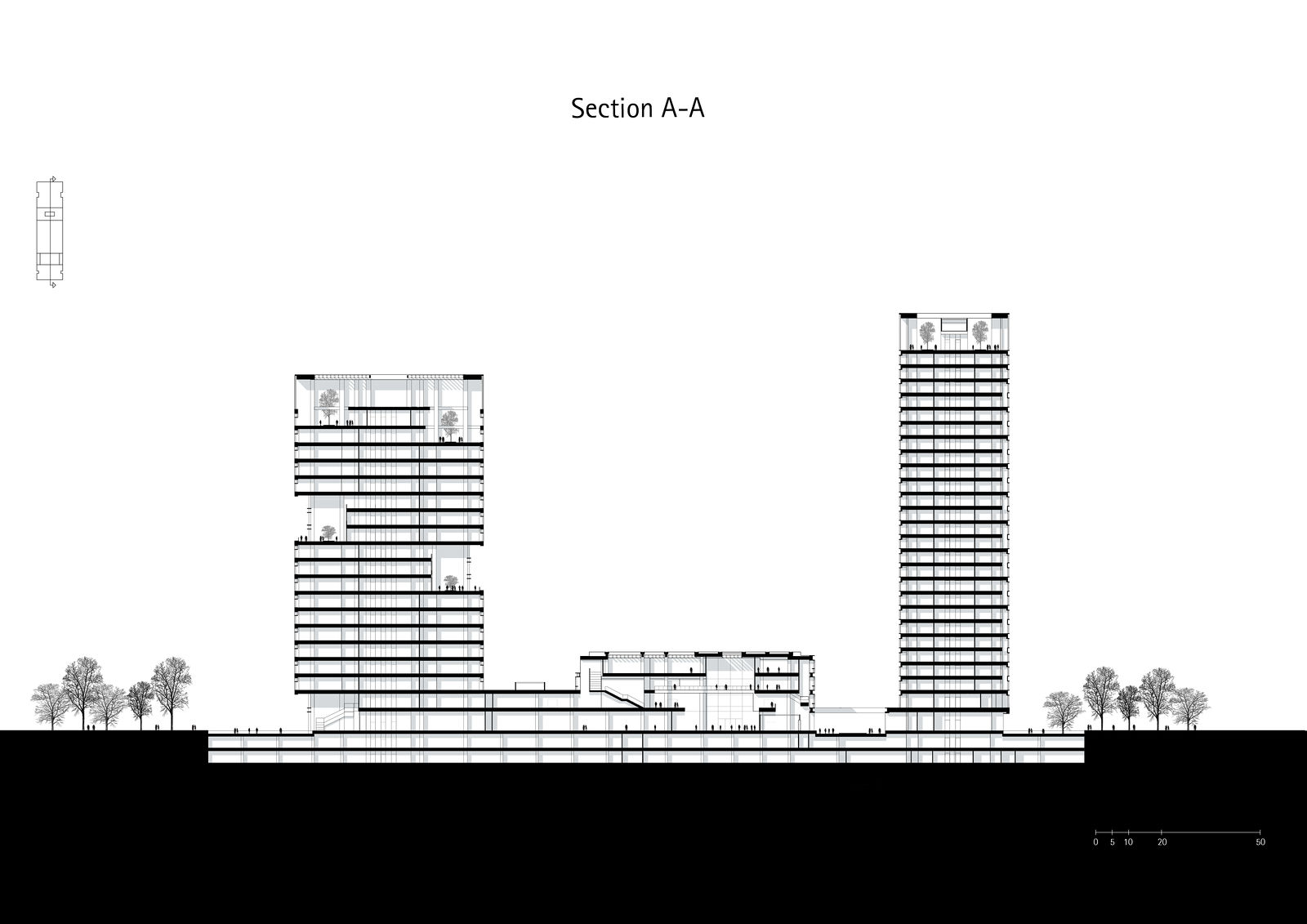
The design concept divides the overall volume specified by the master-plan into three parts: a slender office tower to the north that houses the CHJ Group headquarters; the compact museum that continues the cultural axis and forms the cultural heart of the ensemble; and a residential tower to the south completing the composition. Inside the museum, a sequence of self-contained “exhibition boxes,” conceived as structures within the structure, ensures optimal lighting and climate conditions for the delicate artifacts. Bridges and open stairways guide visitors through the exhibition circuit and offer varied perspectives on the collection. Ground-floor passageways and the public foyer integrate the museum seamlessly with the city and its cultural axis.
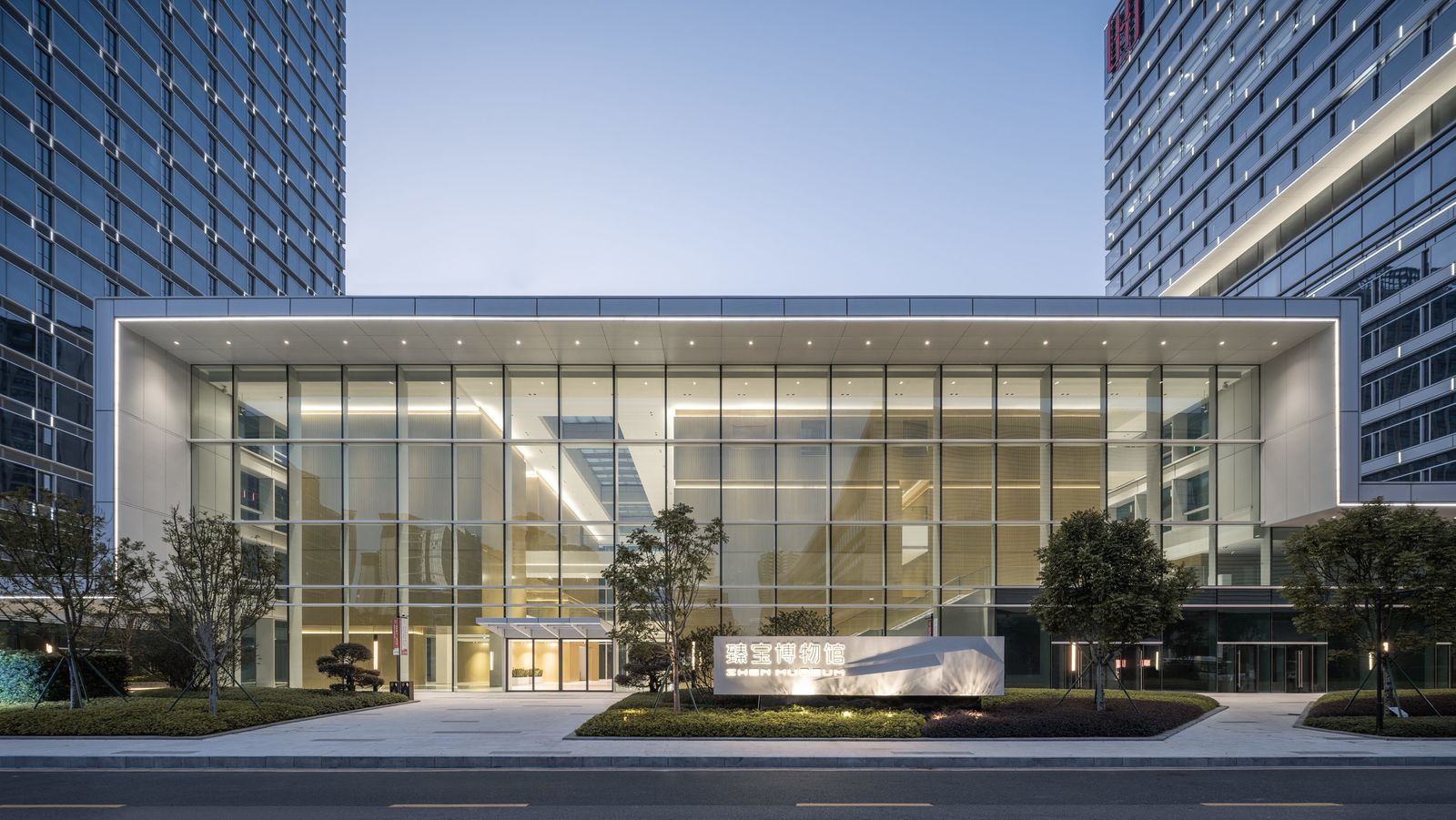
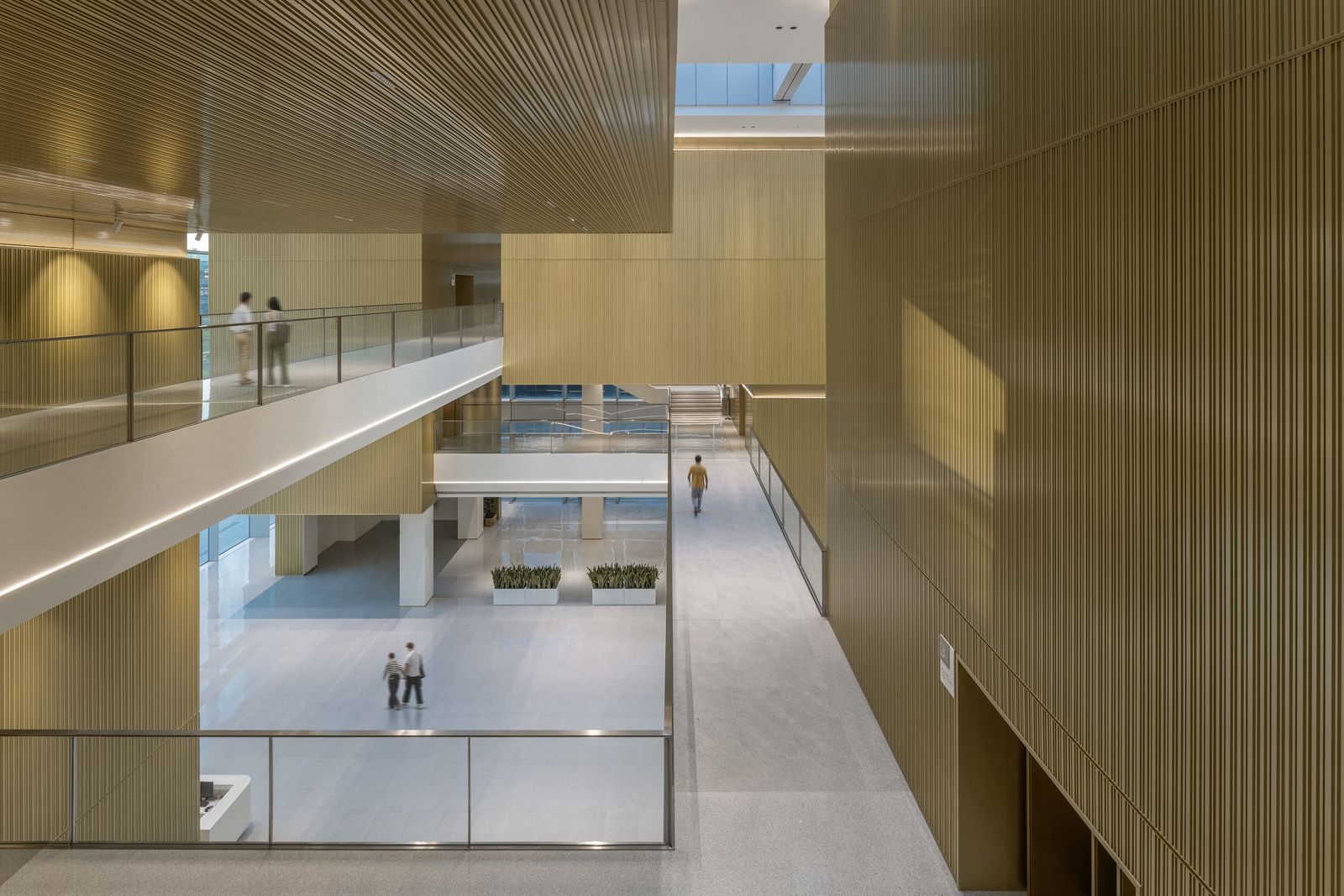
The southern residential tower marks the high point of the composition. Set back on its site, it offers panoramic views toward the bay and nearby mountain landscape. The stepped heights of the three volumes respond both to programmatic requirements and to the broader urban design concept, defining a new silhouette along the waterfront.
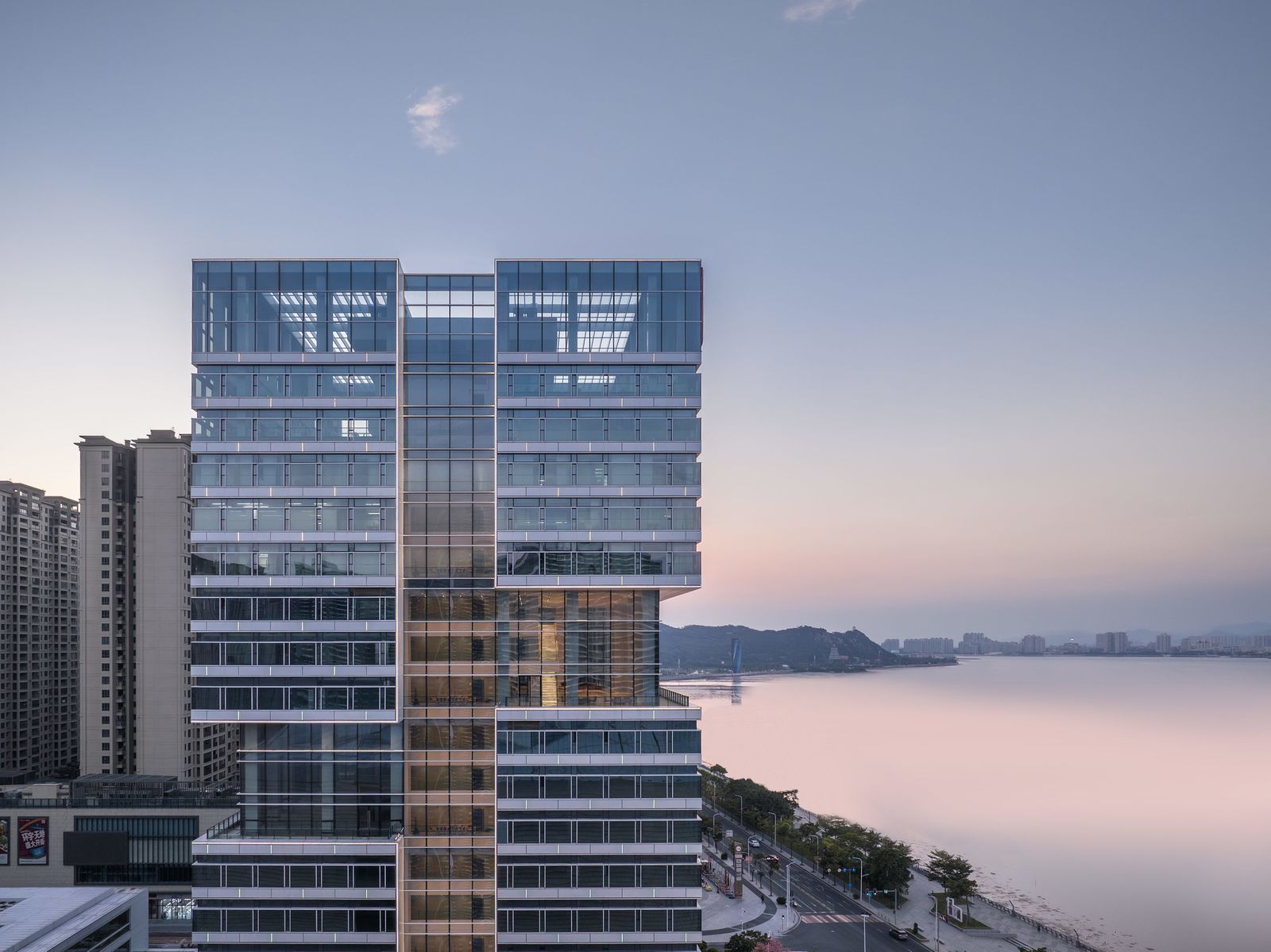
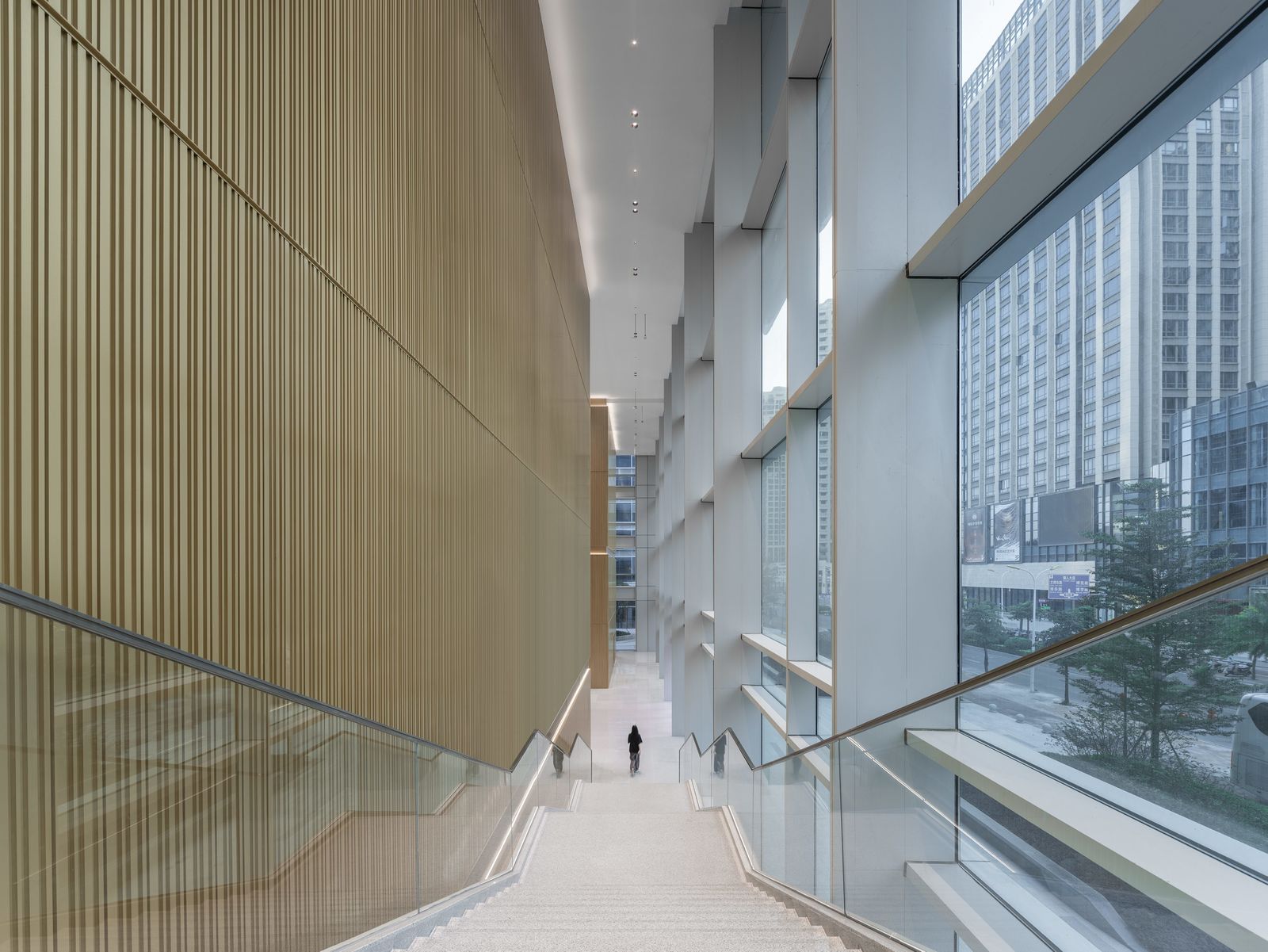
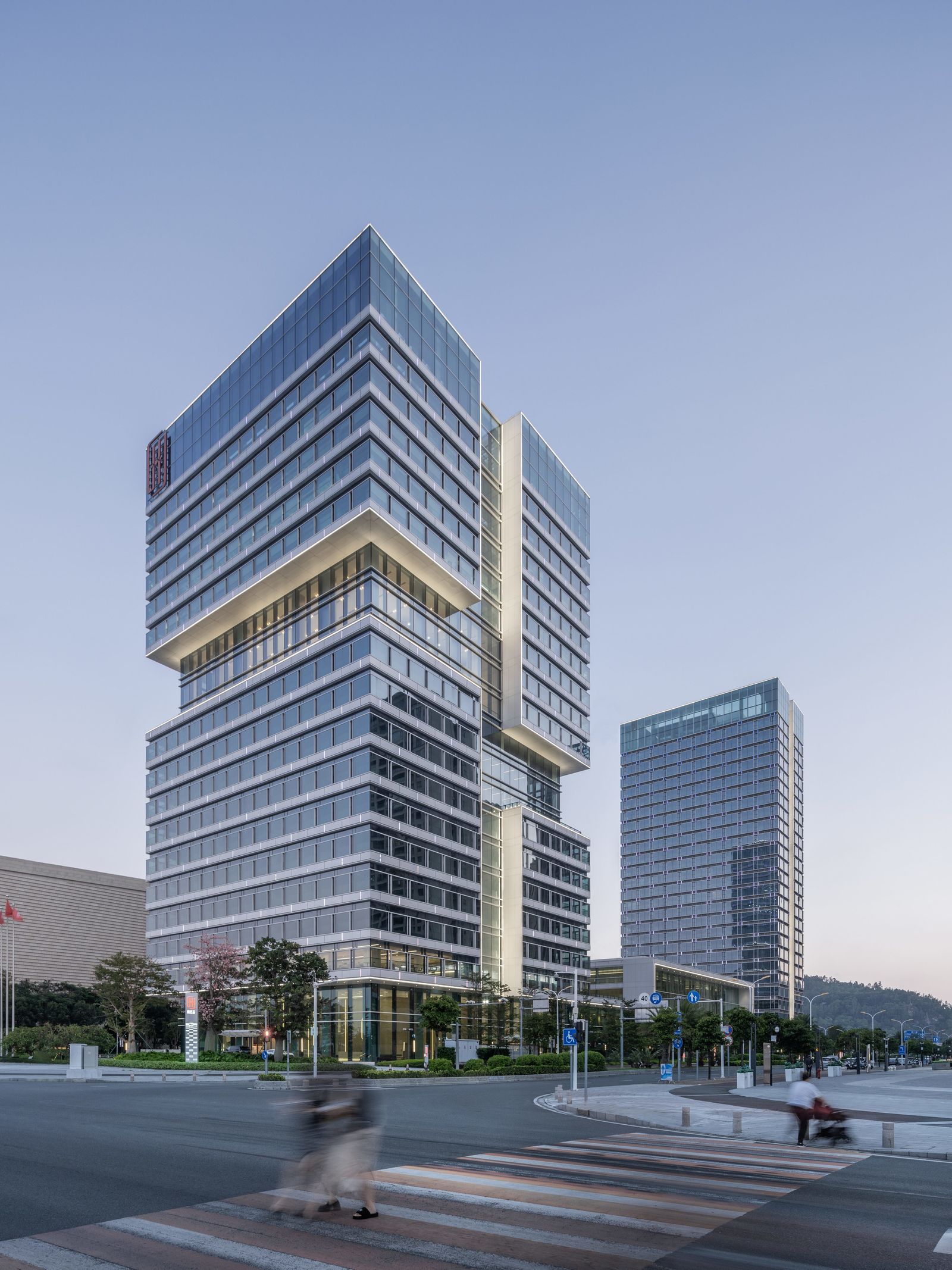
A continuous white aluminum façade band visually unifies the office tower, museum, and residential tower into a single ensemble. Large expanses of glass characterize all three buildings and emphasize the coherent architectural expression. At the same time, each façade is tailored to its respective function: the office tower’s glass surface gains depth through horizontal off-sets and vertical cut-outs that continue inside as two central sky lobbies; the museum’s transparent envelope underscores its public role; and the vertically articulated residential façade incorporates natural ventilation elements and technical systems. Terraces, generous lightwells, and a rooftop garden add further social and environmental value to the development.