Qingdao Science & Technology Museum
A Cultural Landmark on Jiaozhou Bay
With the Qingdao Science & Technology Museum on Hong Island, the architects von Gerkan, Marg and Partners (gmp) have created a cultural facility that provides important momentum for the urban development of Qingdao. As one of China’s leading centers for marine research, the city is home to a large share of the country’s national research institutions, which form the thematic context of the museum.
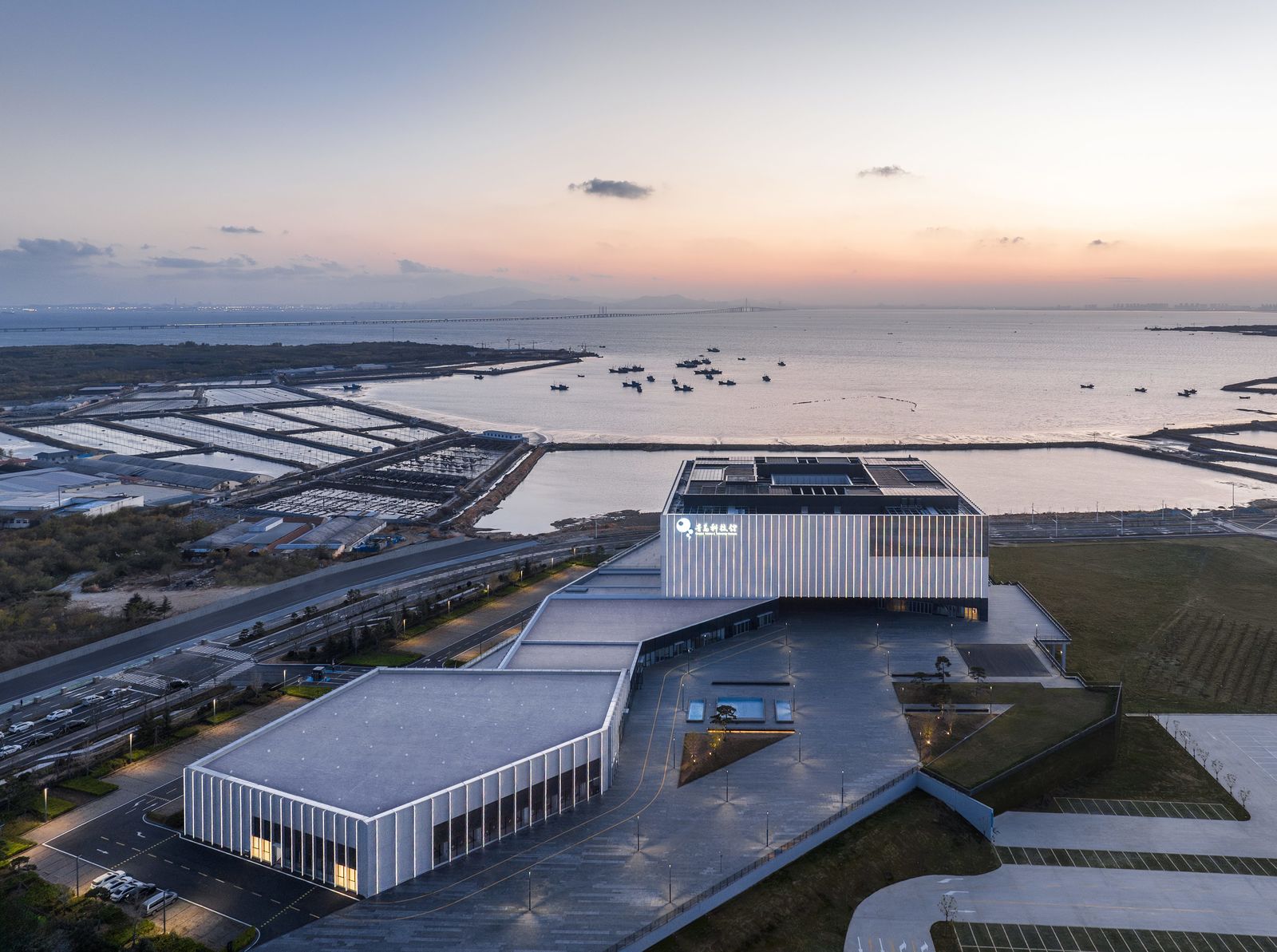
Since the 1980s, the coastal metropolis has expanded along Jiaozhou Bay: from the historic old town on the southeastern side of the bay, through the development of shoreline areas on the opposite side, and now extending to the current project site. At the same time, Qingdao developed into a center for marine sciences and is the home of Ocean University of China. The new museum further strengthens the scientific and cultural profile of the region: it makes the previously barely-visible research landscape accessible to the public while also serving as a catalyst for the development of the waterfront zone, which until now has remained only partially built up. The decision to build the museum at its current site in the northeastern part of the bay — rather than as part of Qingdao’s seaside promenade, as had been planned originally — underscores its strategic importance for the city’s long-term development.
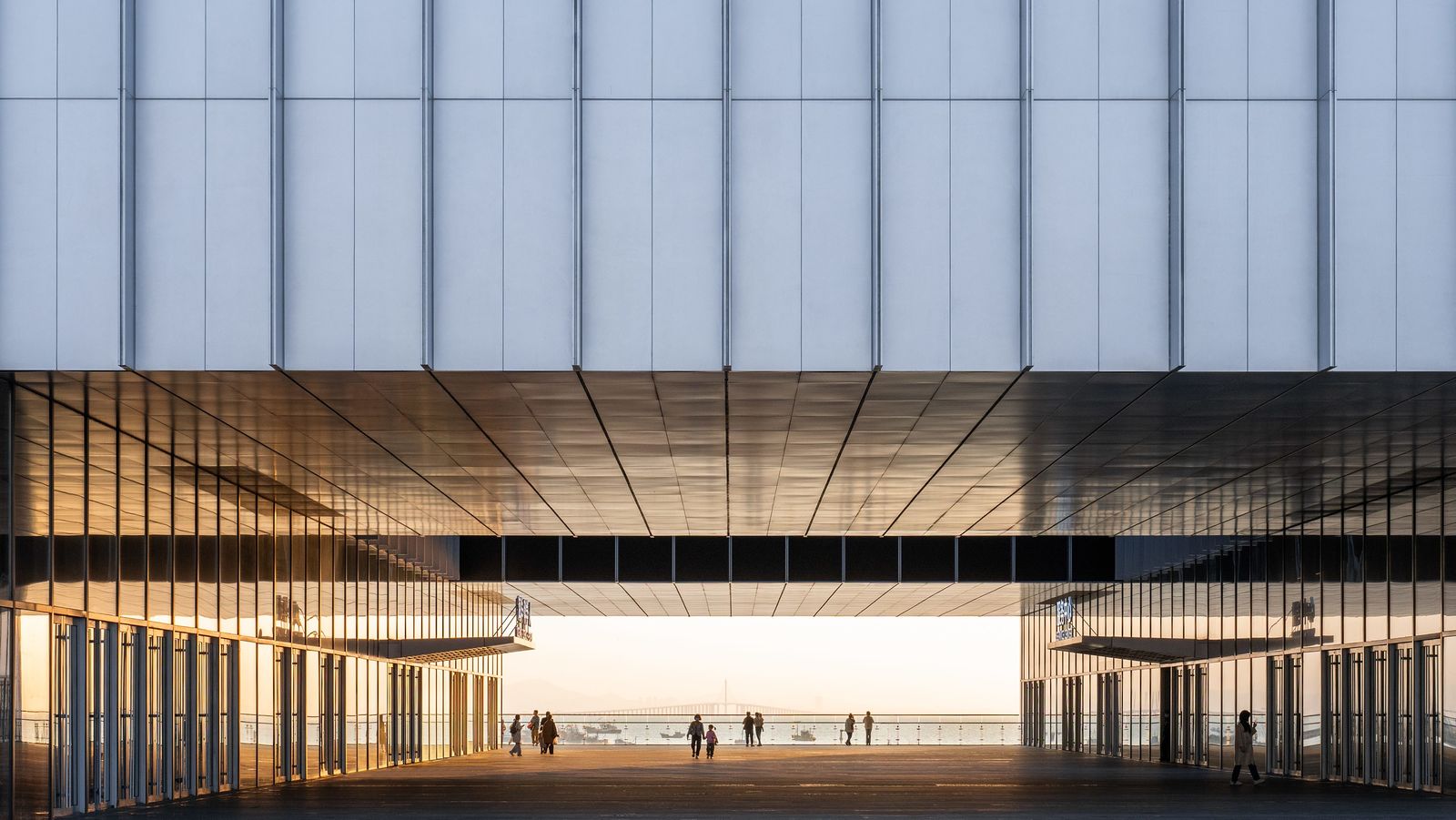
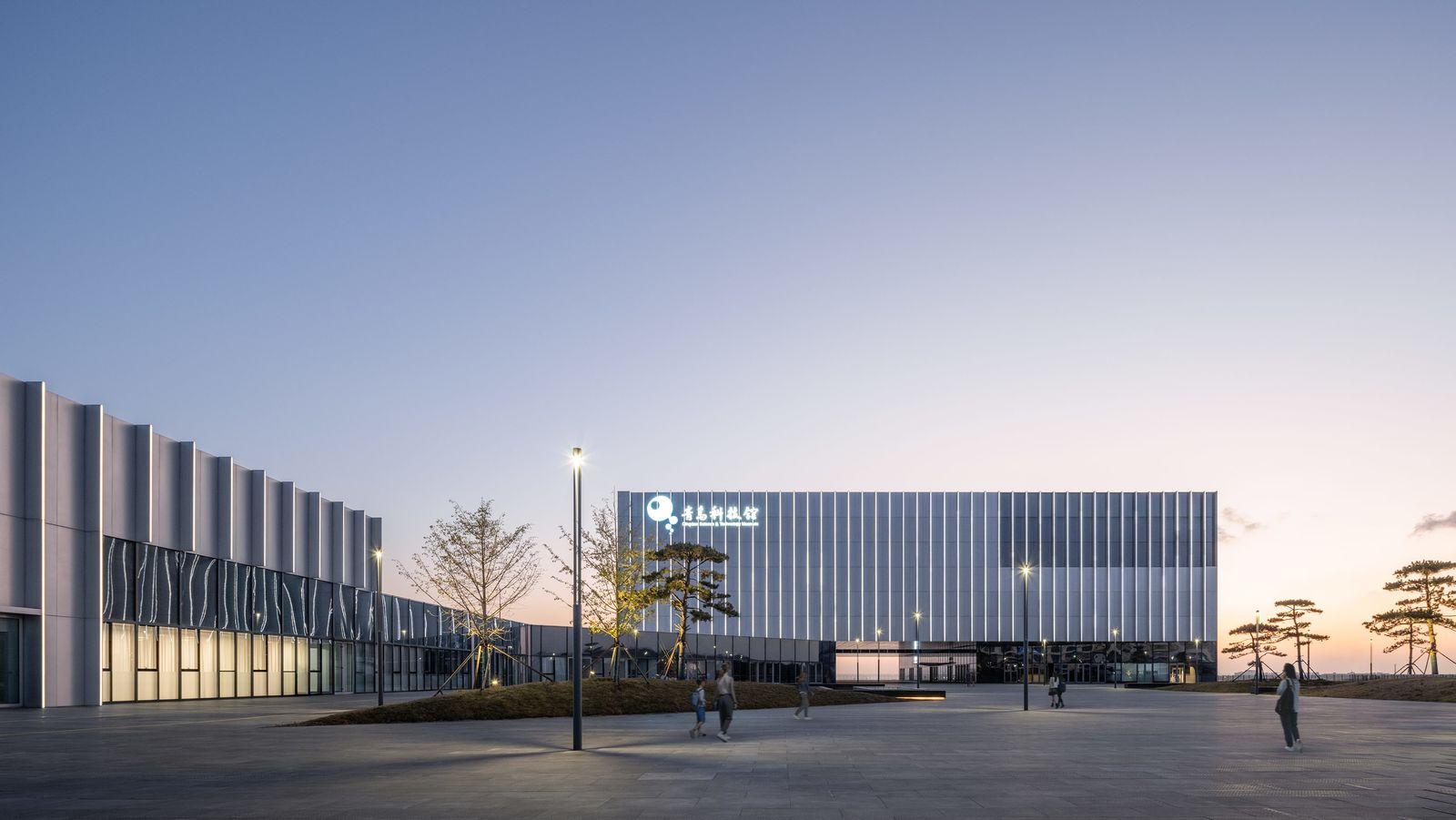
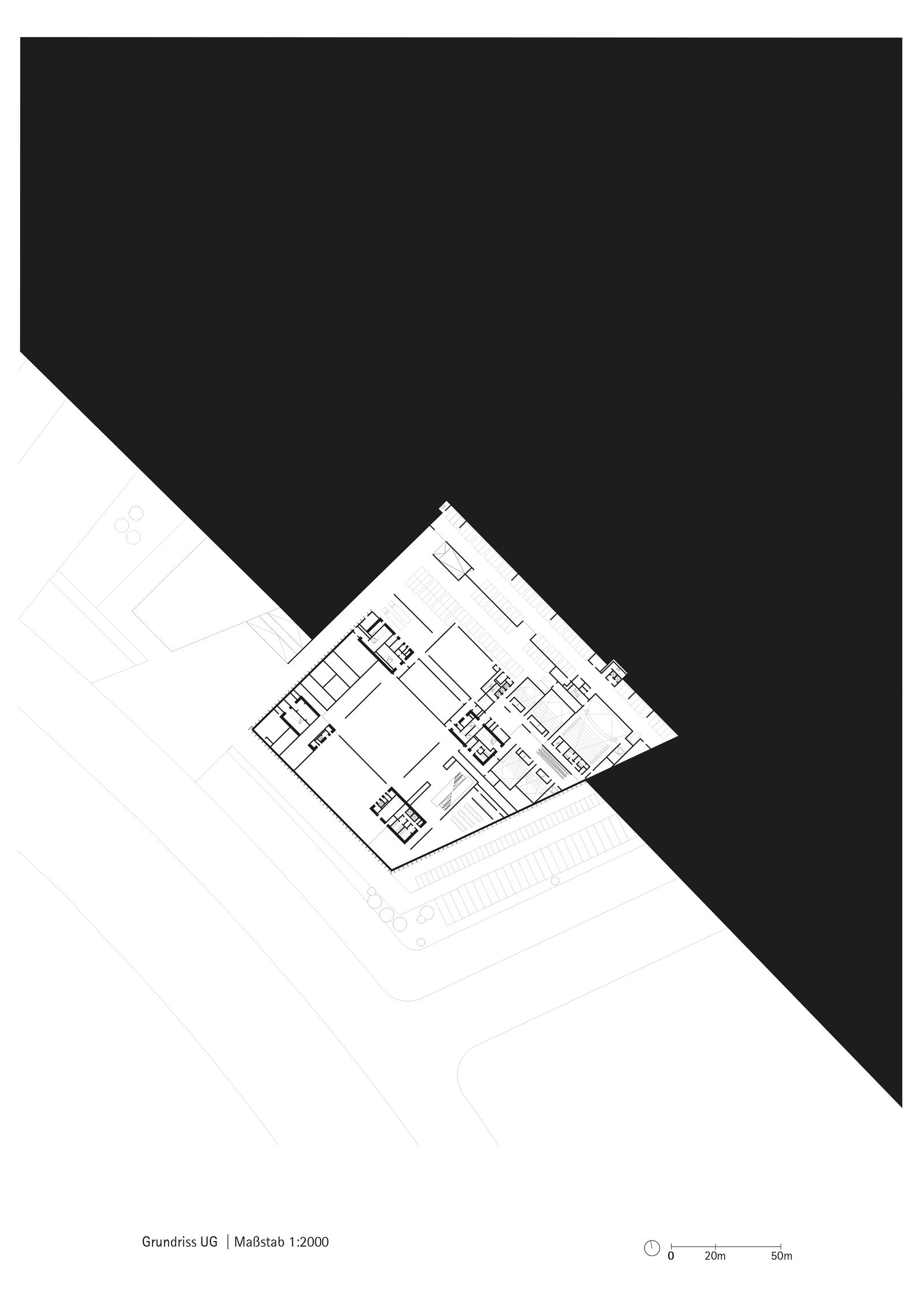
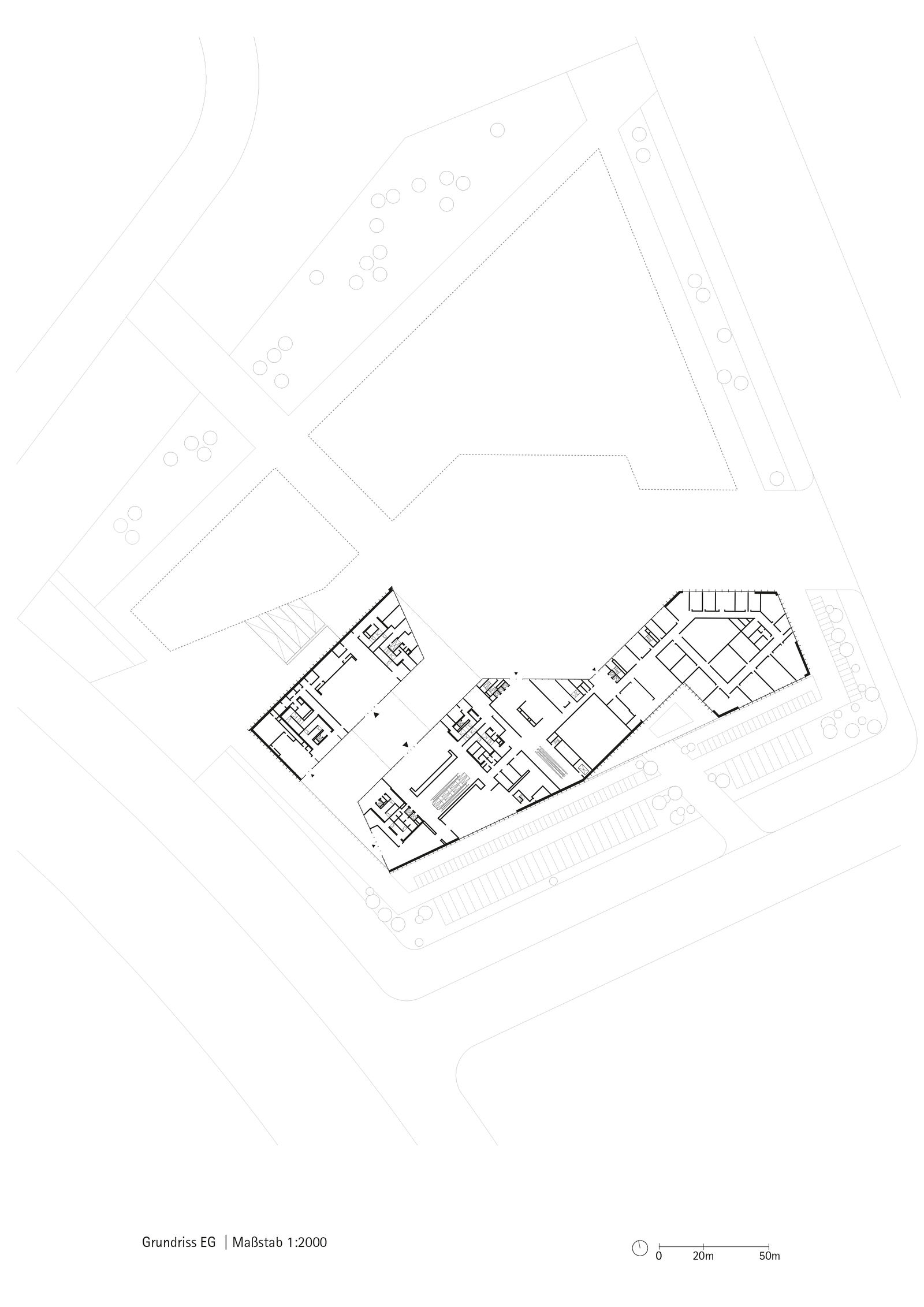
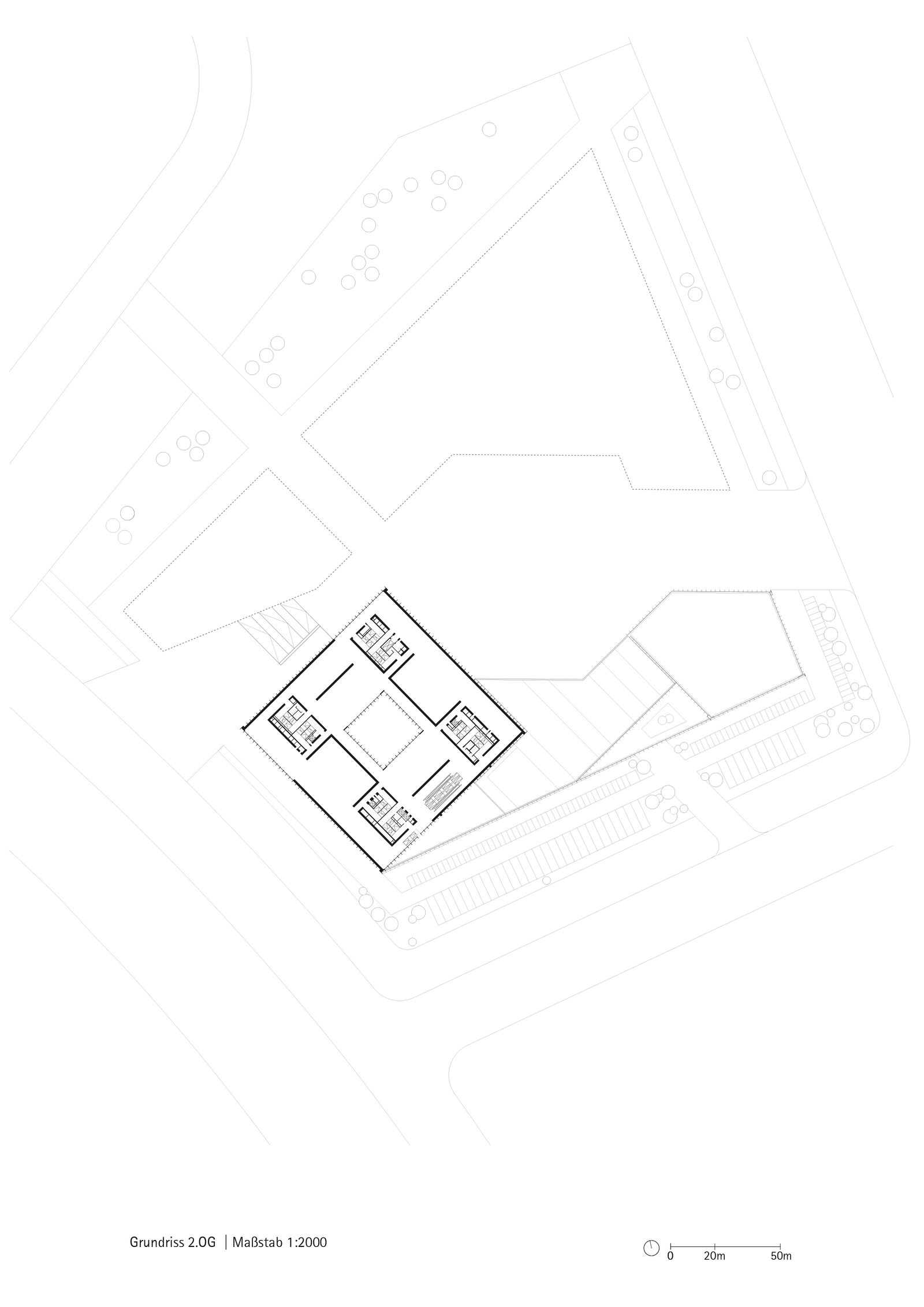
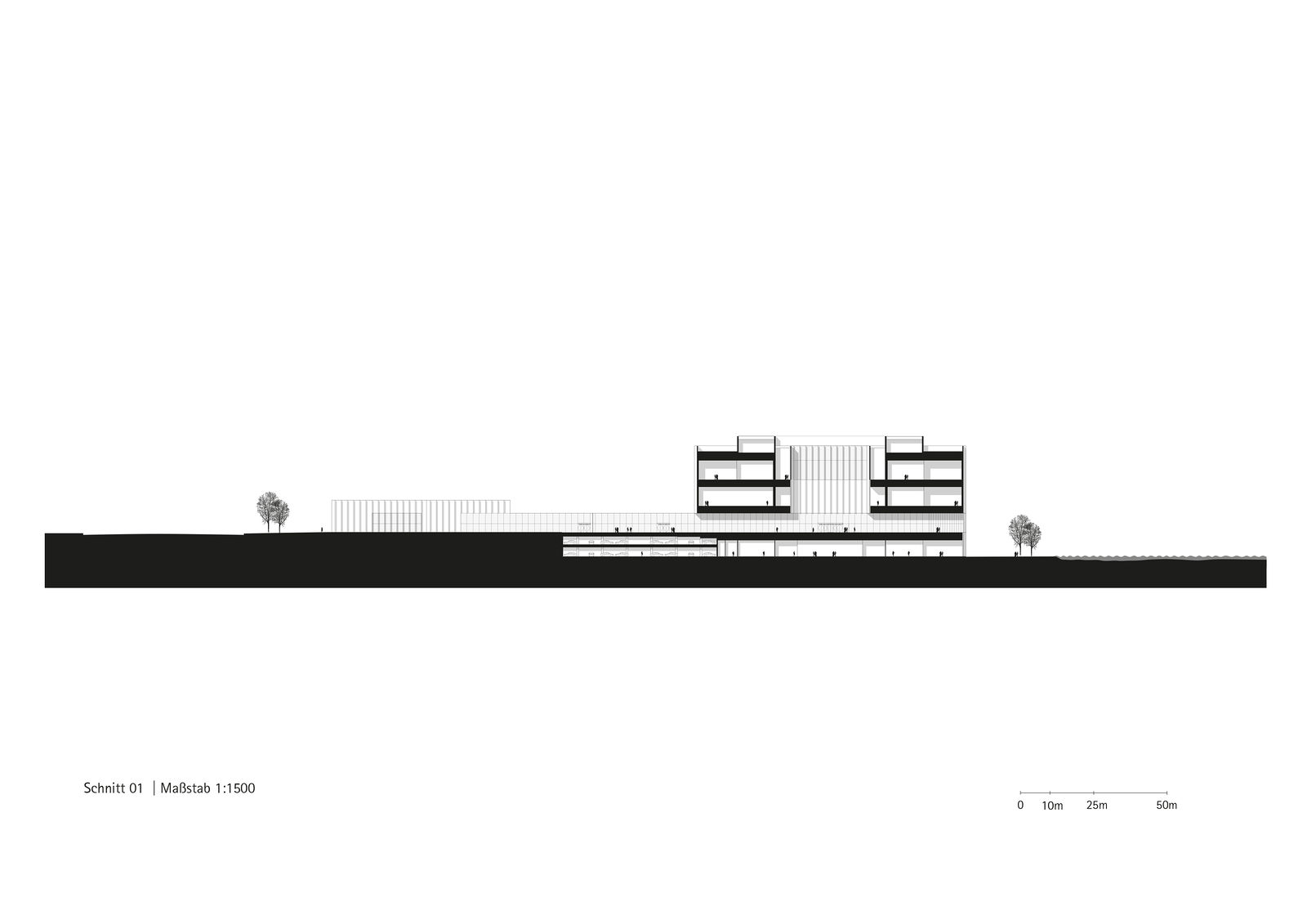
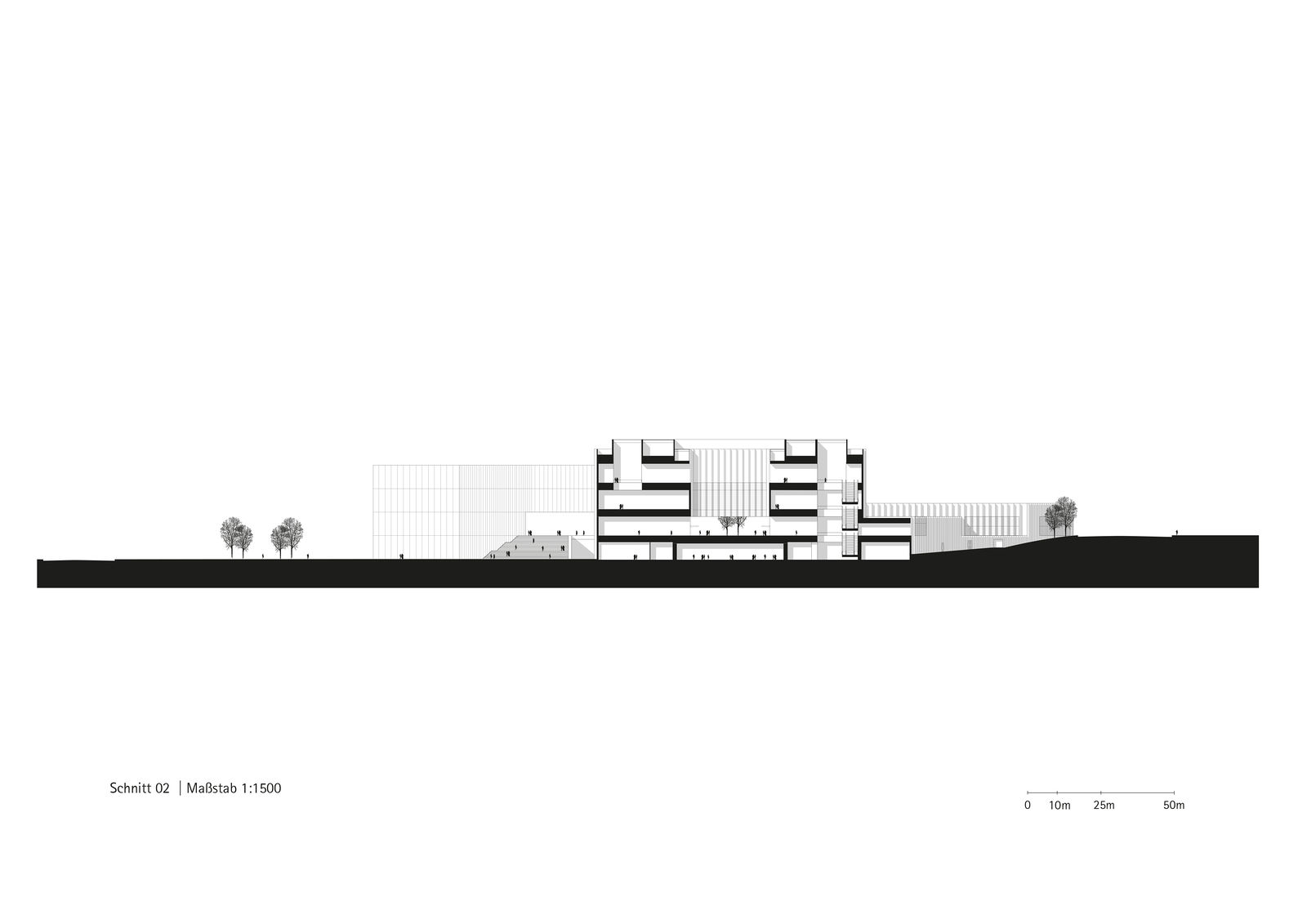
Life by and with the water is both the thematic focus of the exhibition and the guiding concept of the architecture. The museum has been designed in the shape of a compact cube set on a podium at the water’s edge. A public pathway runs through the ground floor to an observation terrace, opening views across the bay. The building itself emphasizes its message: circulation routes and sightlines are consistently oriented toward the sea, making it an ever-present visual point of reference before, during, and after the museum visit.
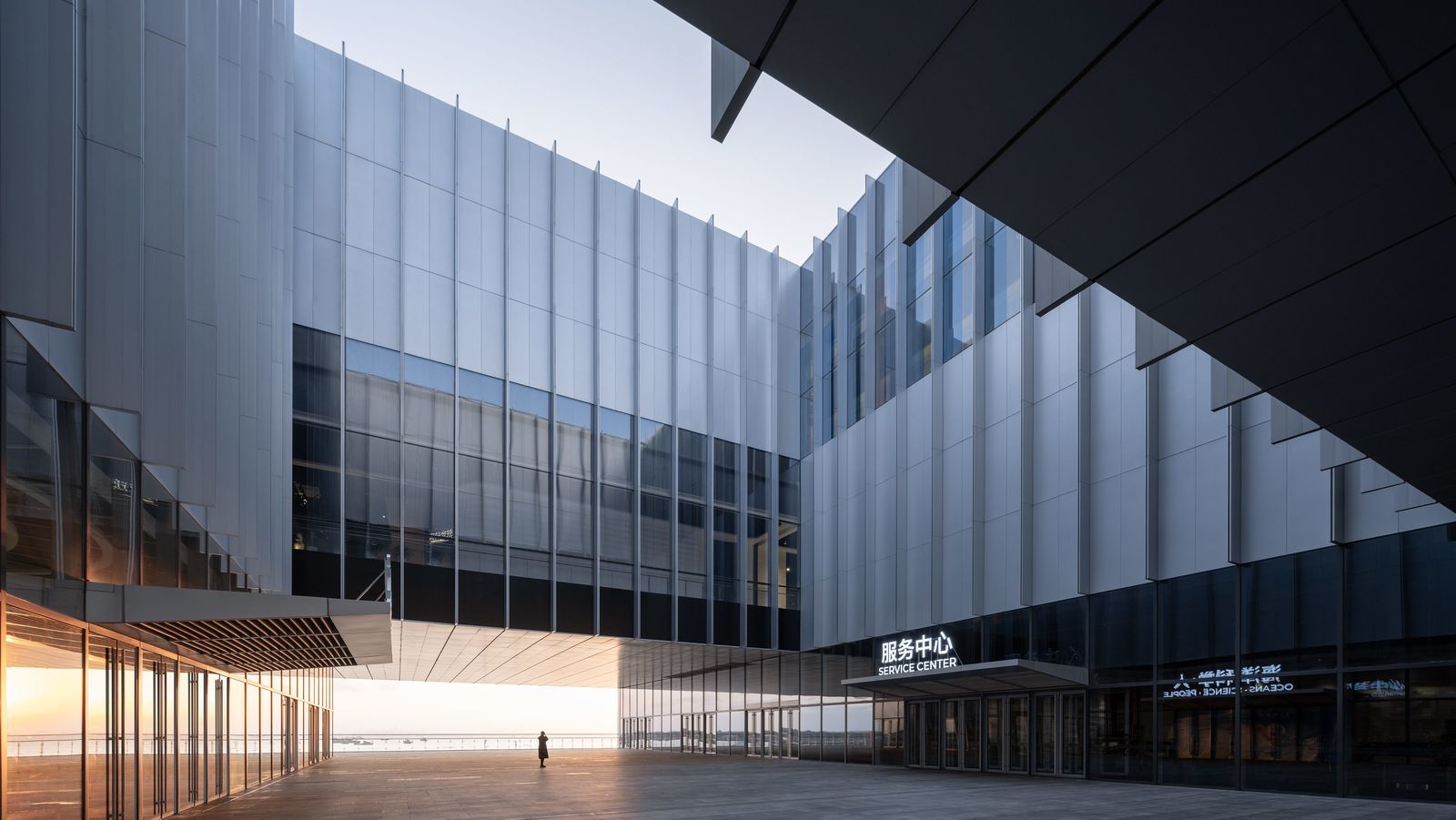
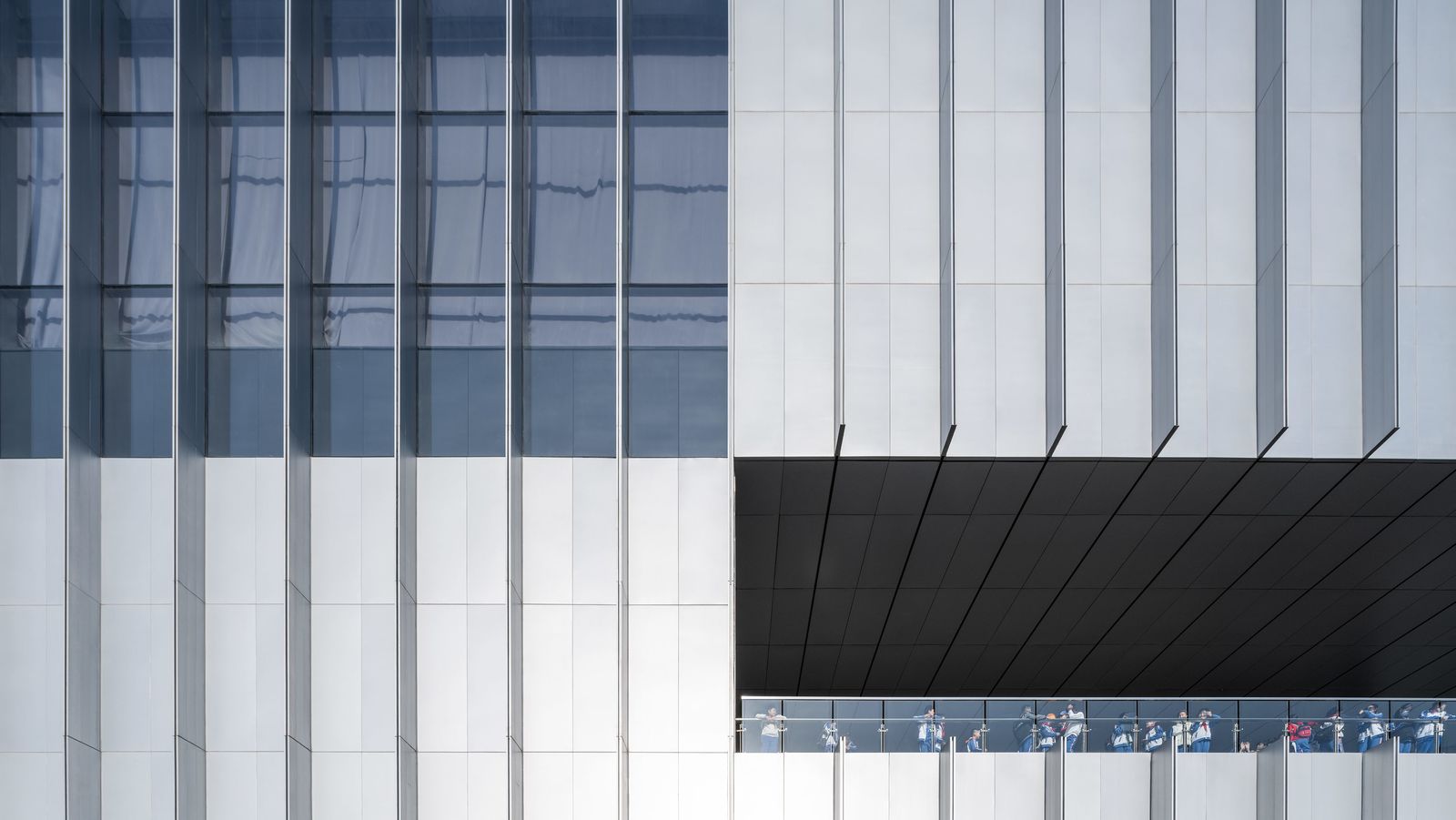
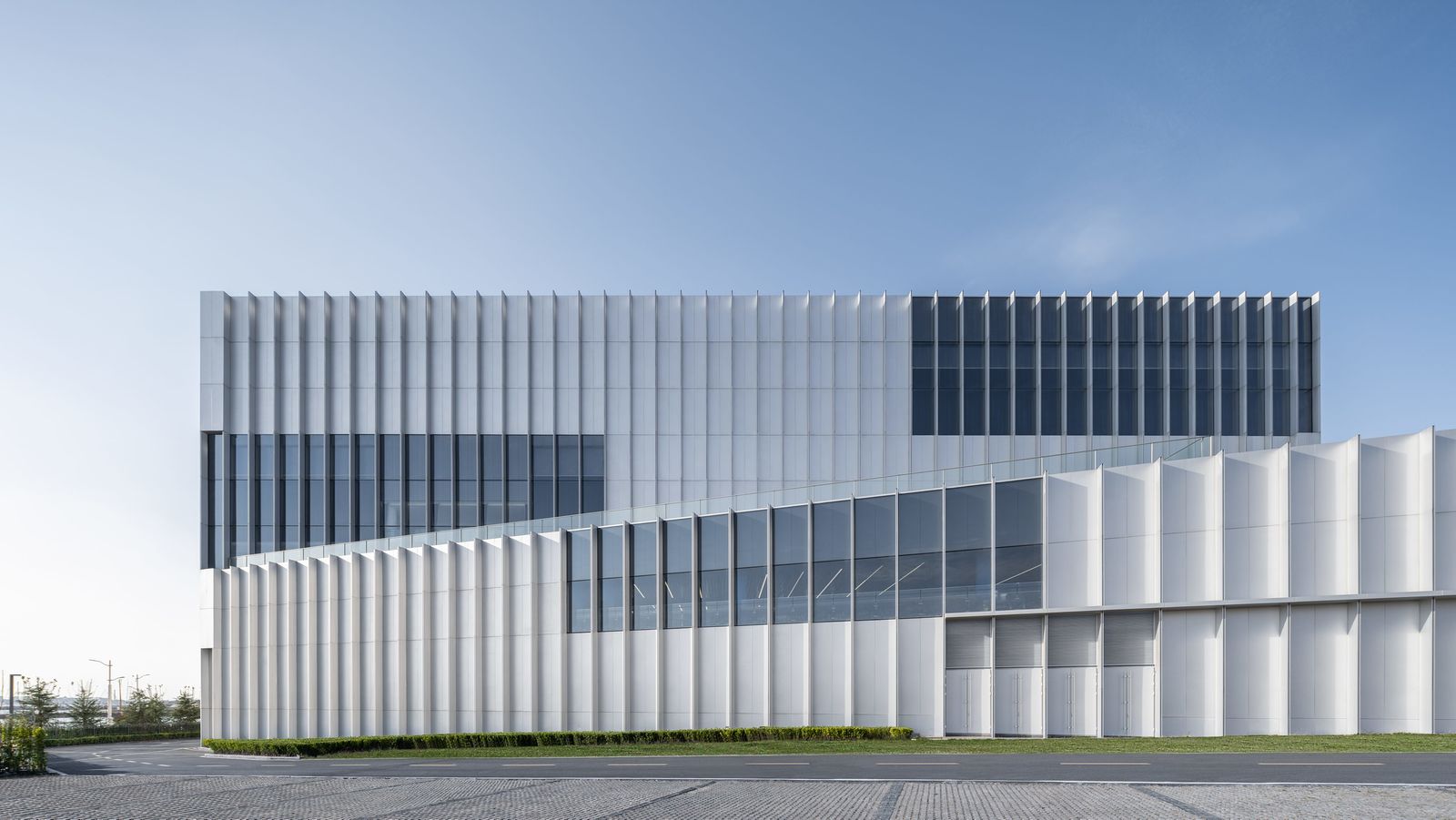
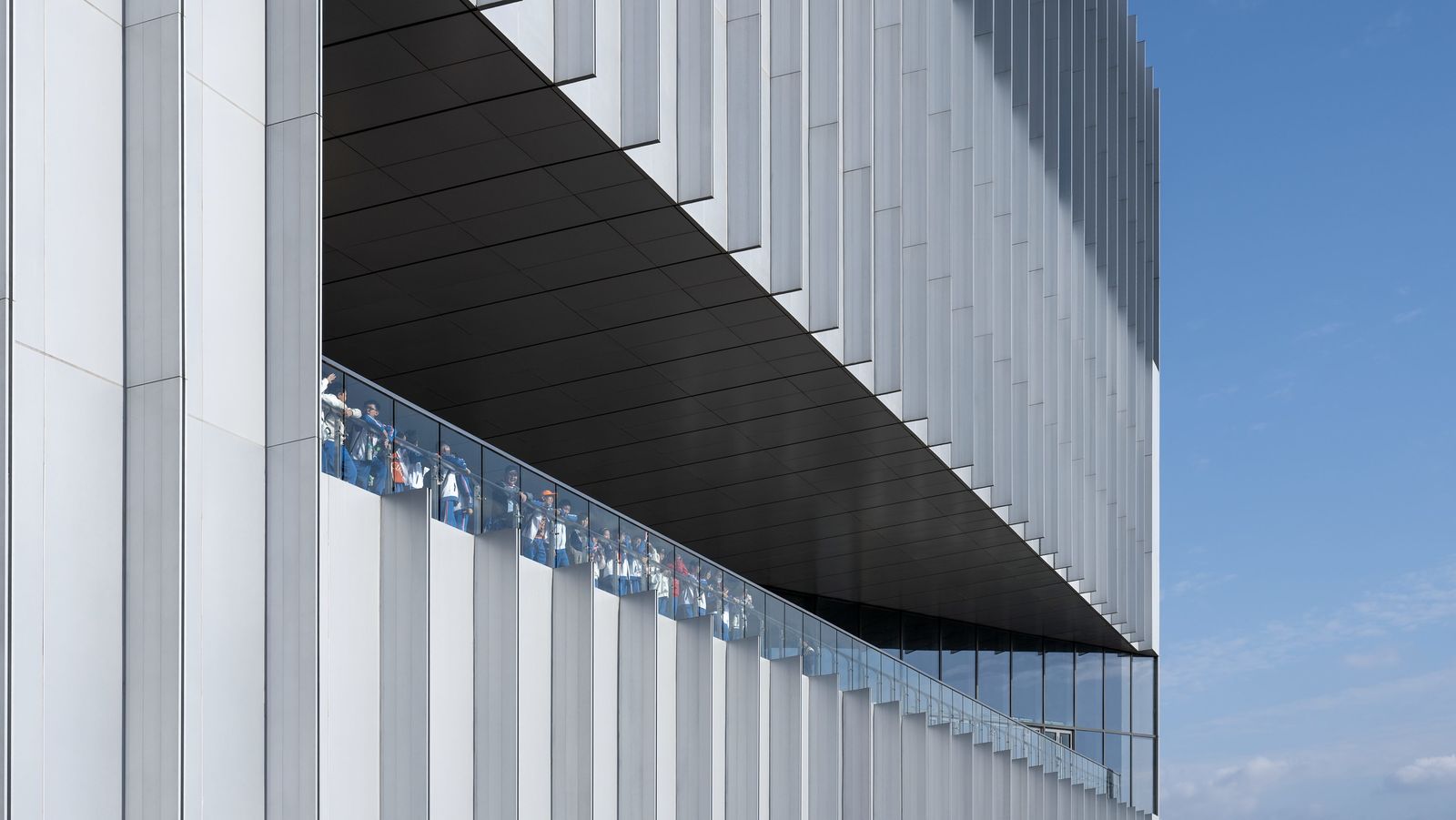
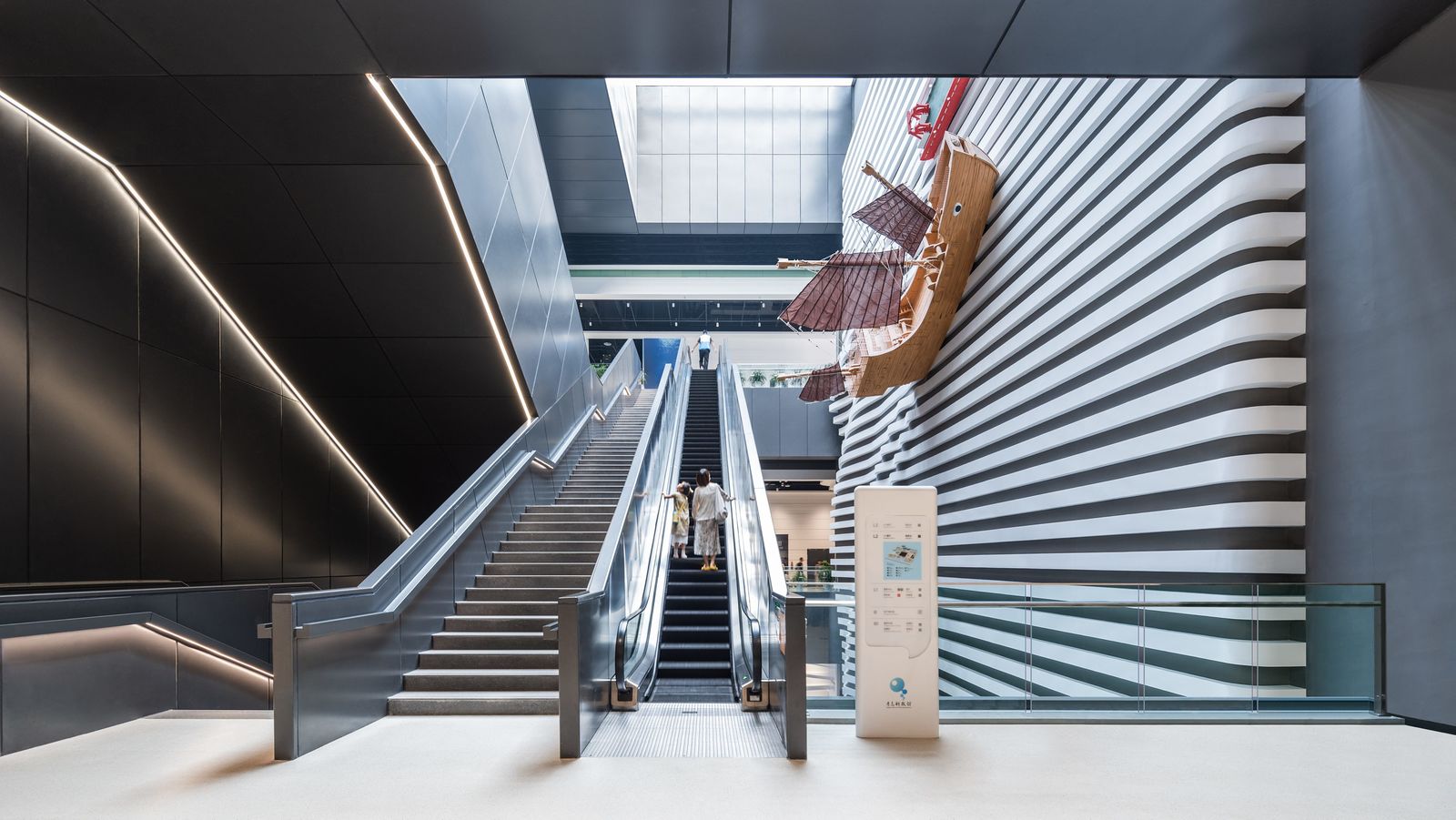
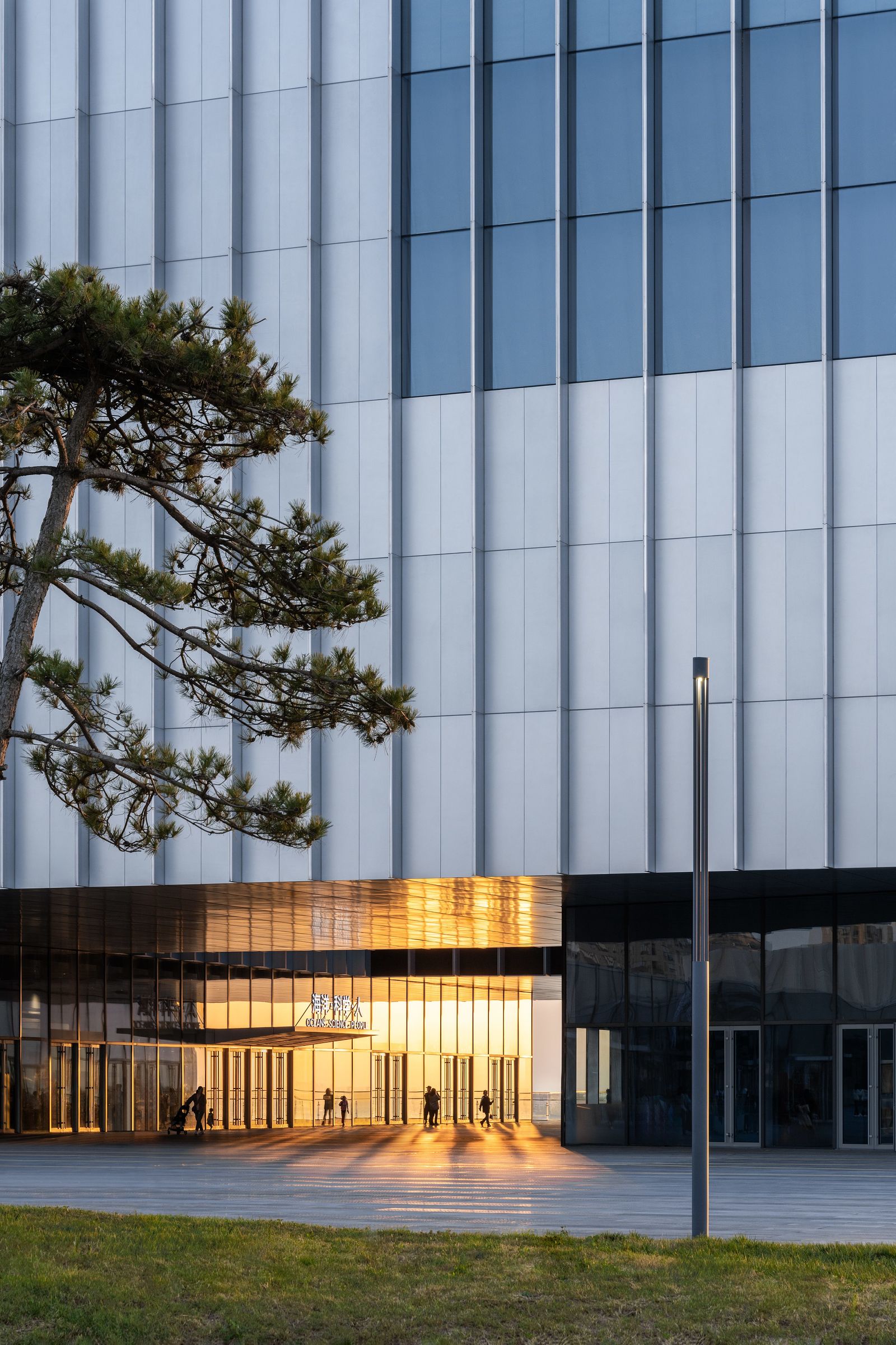
Two entrances lead through a central courtyard to separate functional areas: one entrance provides access to the museum, café, and shop, while a second entrance on the opposite side leads to the conference facilities. The exhibition is devoted to the history of the sea, modern marine research, the diversity of marine habitats, and the development of shipping. The centerpiece of the exhibition consists of a historic wooden junk that is several stories high. Large openings in the metal façade frame views of the sea, thus creating an interplay between the place and the exhibition. Vertical fins provide a visual structure to the building envelope, whose appearance changes depending on the time of day and lighting conditions. Integrated LED elements make the museum visible within the urban landscape at night as well.
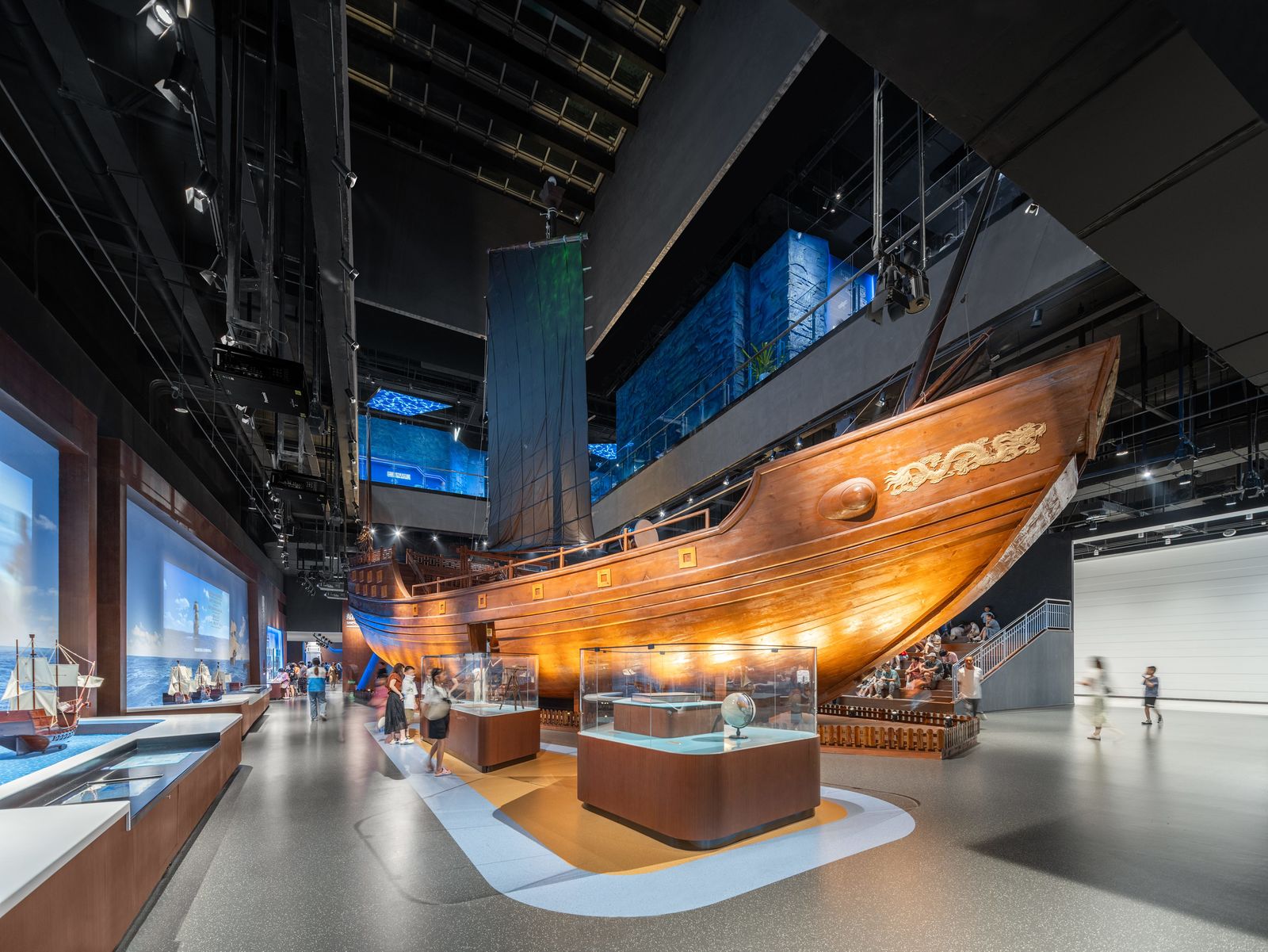
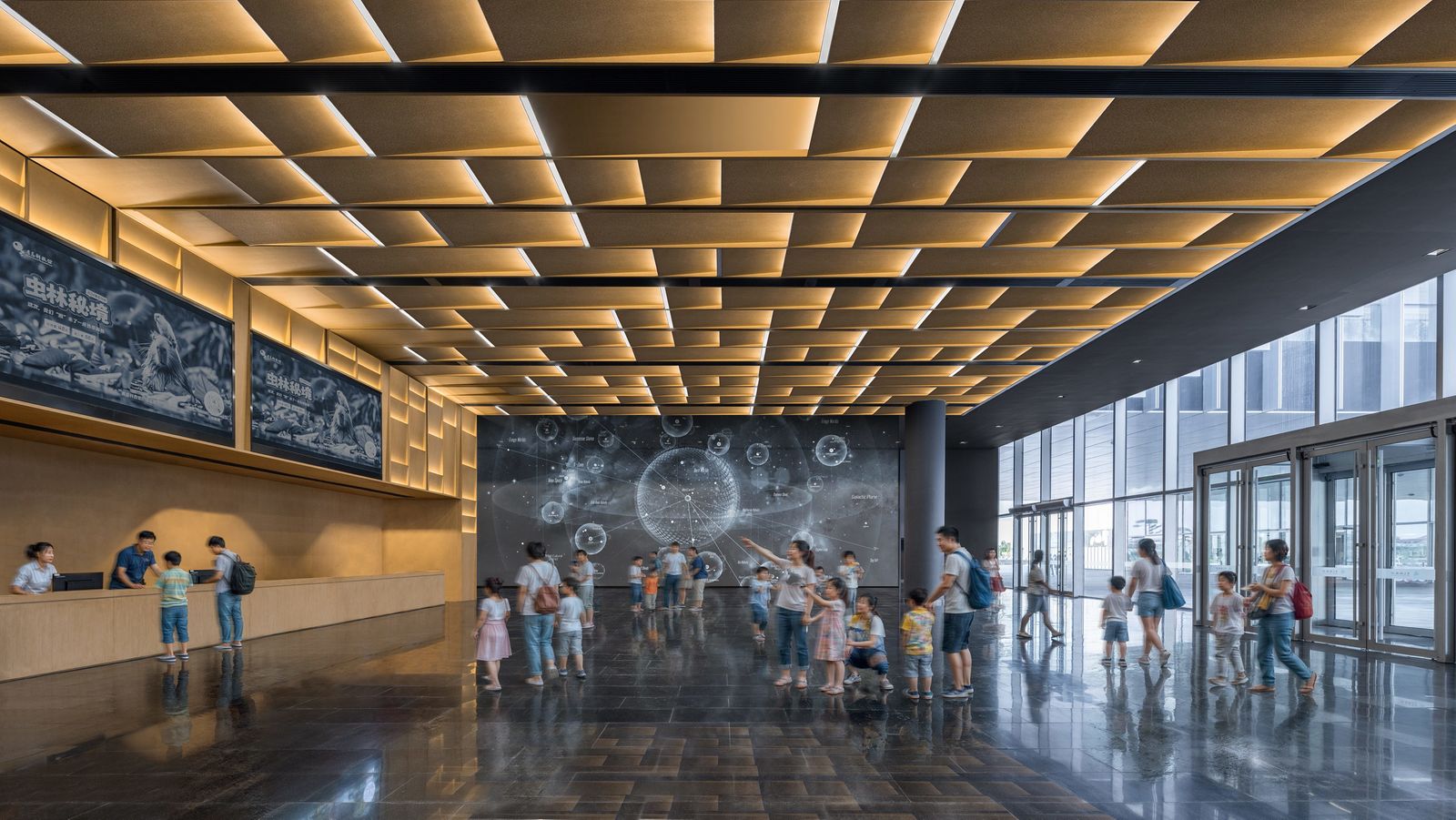
The overall project consists of two construction phases. Now that the museum has been completed, the ensemble is to be expanded in a second phase to include, among other elements, a marine aquarium and a planetarium.