

TXL as a potential EXPO 2035 location:
Initial concept for one of Europe's largest urban development projects
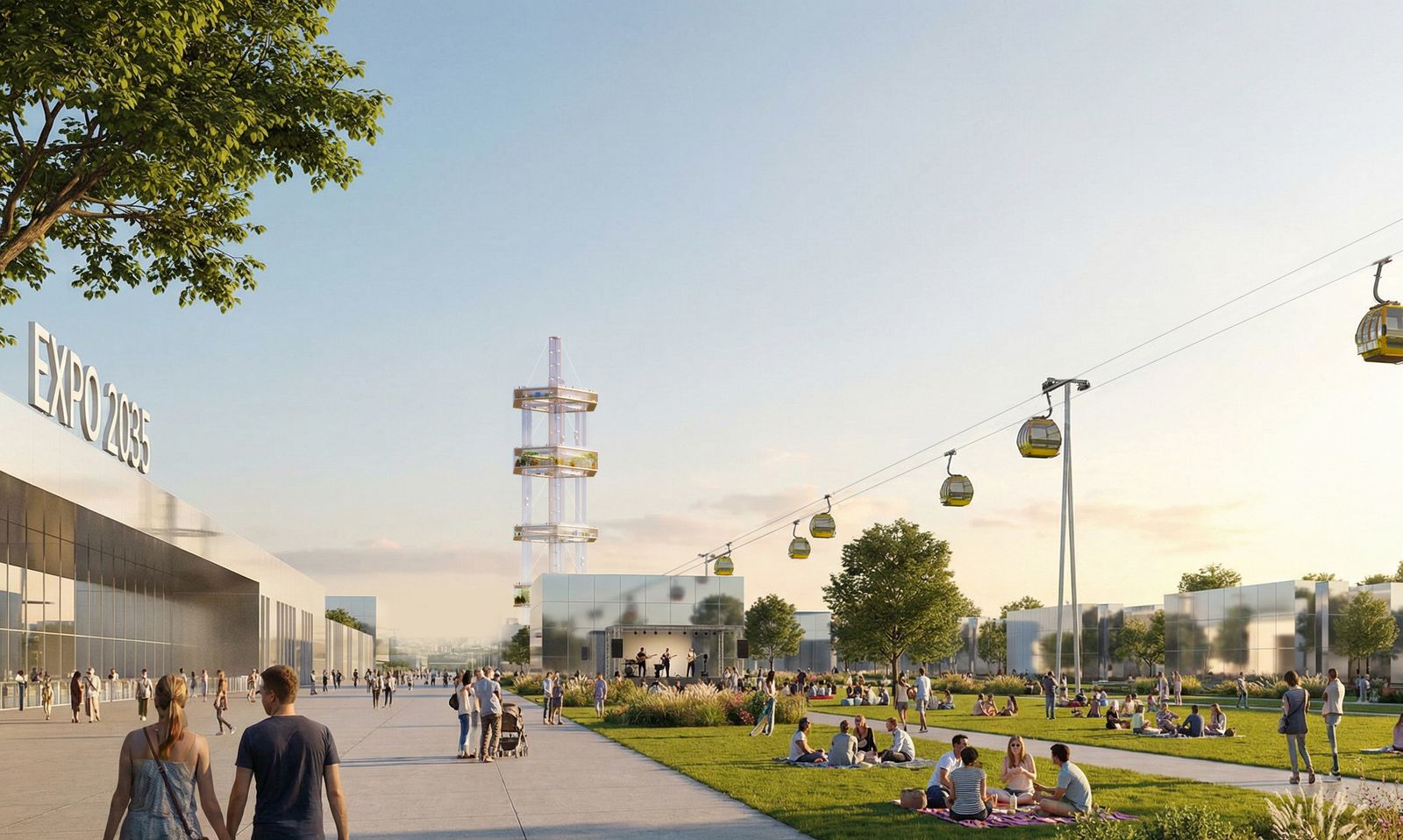
Together with EXPO 2035 Berlin GmbH, the architects von Gerkan, Marg and Partners (gmp) are presenting for the first time an architectural vision of how the site of the former Berlin Tegel Airport could become a central location for EXPO 2035 while simultaneously evolving into one of the largest urban investment and development projects in Europe.
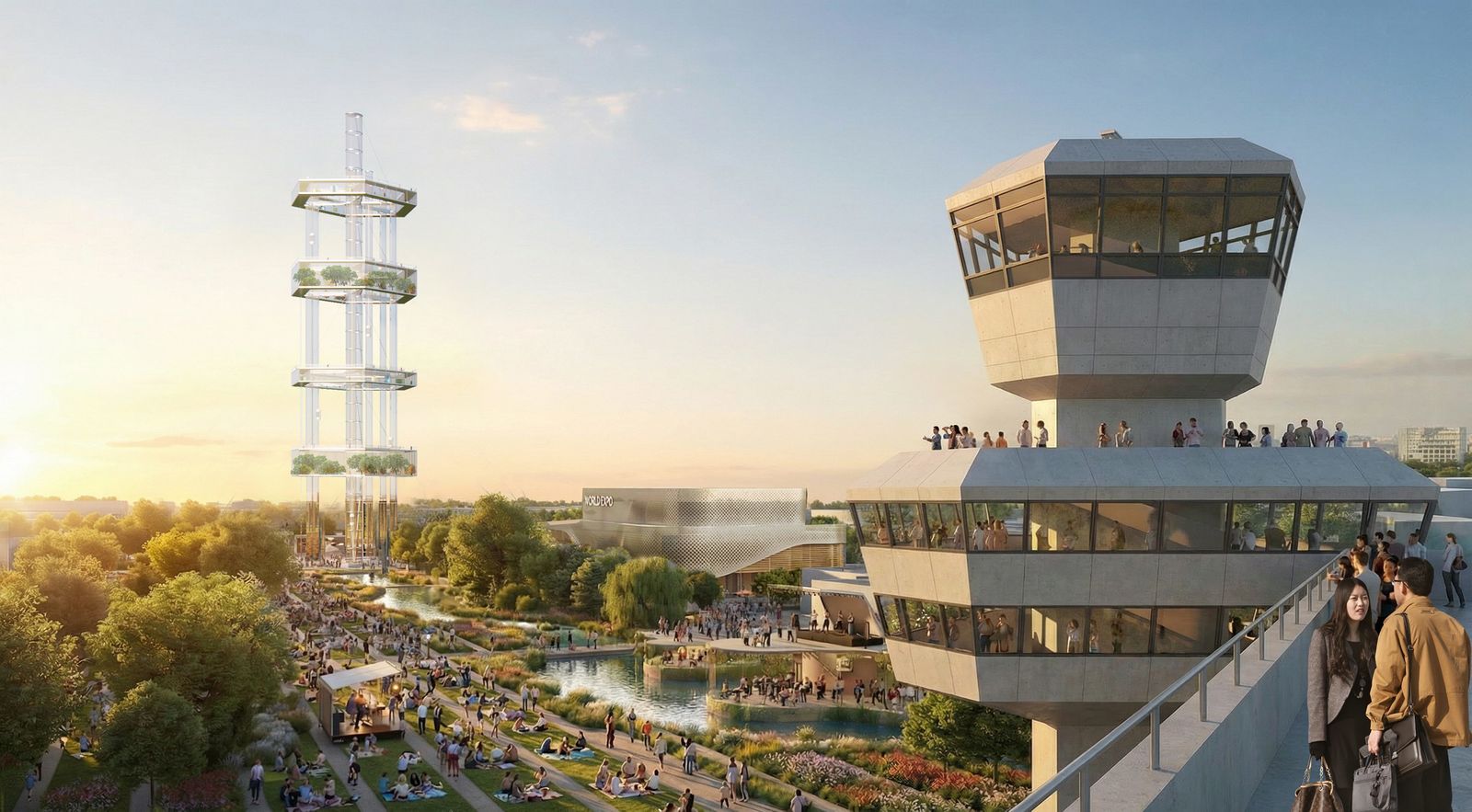
gmp has been involved with the Tegel Airport site on three separate occasions. Between 1966 and 1974, the firm designed and built the world’s first drive-in airport terminal there. Conceived as an “airport of short distances” and listed as a protected monument since 2019, the building won the hearts of Berliners with its unique functionality and became one of the capital’s landmarks. Between 2008 and 2021, on behalf of the Berlin Senate and Tegel Projekt GmbH, gmp developed the conceptual basis for the future use of the approximately 460-hectare airport site. The Urban Tech Republic is already being created there as a research and industrial park for urban technologies aimed at making cities more sustainable, efficient, and livable.
Now, five years later, gmp is once again engaged on the site—this time as part of a forward-looking initiative: developing it as the main venue for EXPO 2035 and subsequently transforming the area into an urban district that will form the spatial and programmatic culmination of the Urban Tech Republic.
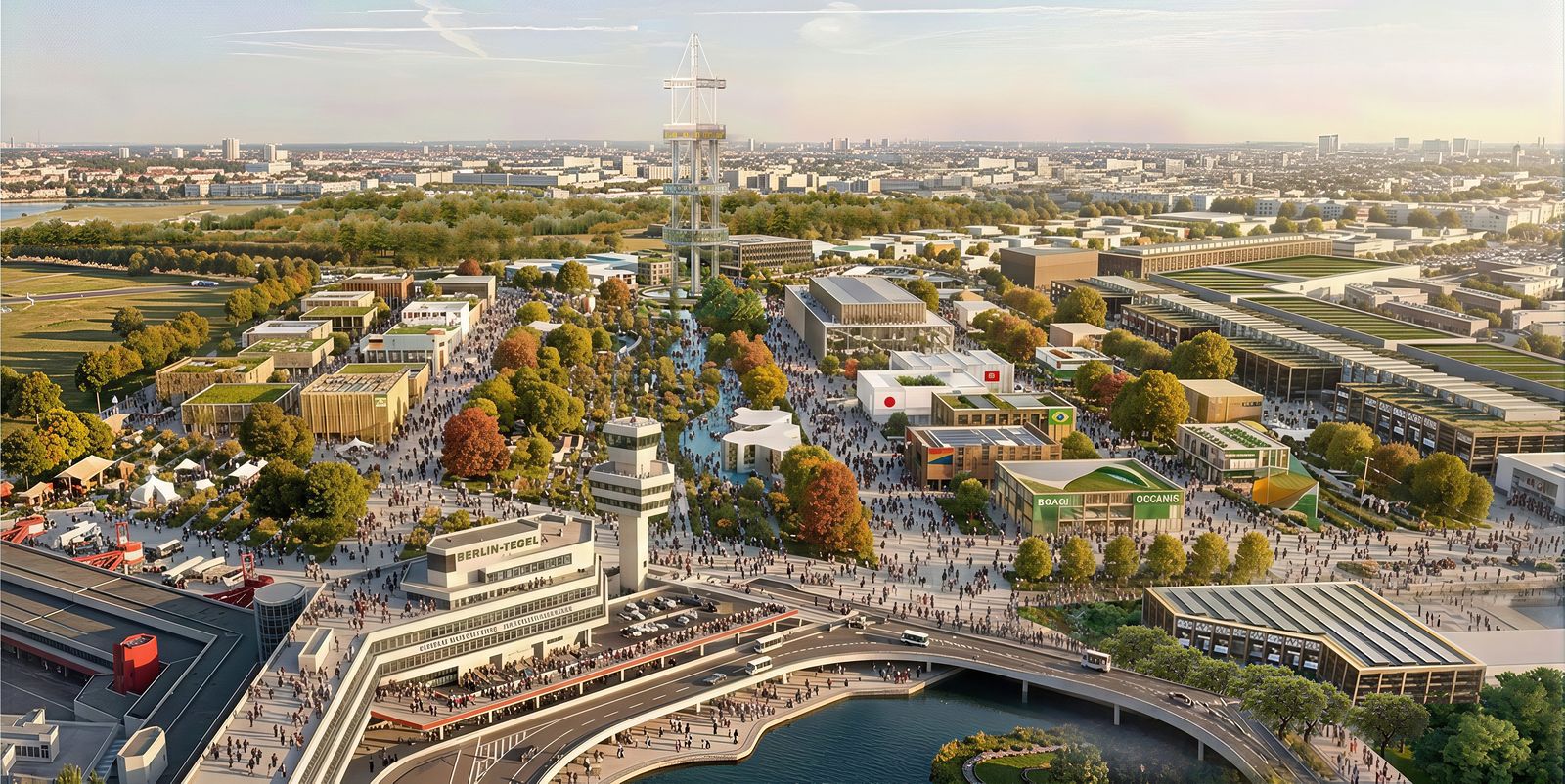
Together with the initiative EXPO 2035 Berlin GmbH which is committed to making the Berlin metropolitan region sustainable and future-ready by 2035, gmp examined the extent to which the eastern section of the Urban Tech Republic—between the terminal and the Kurt-Schumacher-Quartier—could be used for EXPO 2035. The analysis shows that the site, covering around 127 hectares, even exceeds the size of the Expo grounds at the most recent host location, Osaka.
Transportation connections exist to the south and west and could be further developed based on existing mobility concepts. The neighboring urban districts as well as the Urban Tech Republic campus offer ideal starting points for subsequent development as a mixed-use urban neighborhood, which will also benefit from the surrounding landscape areas to the north.
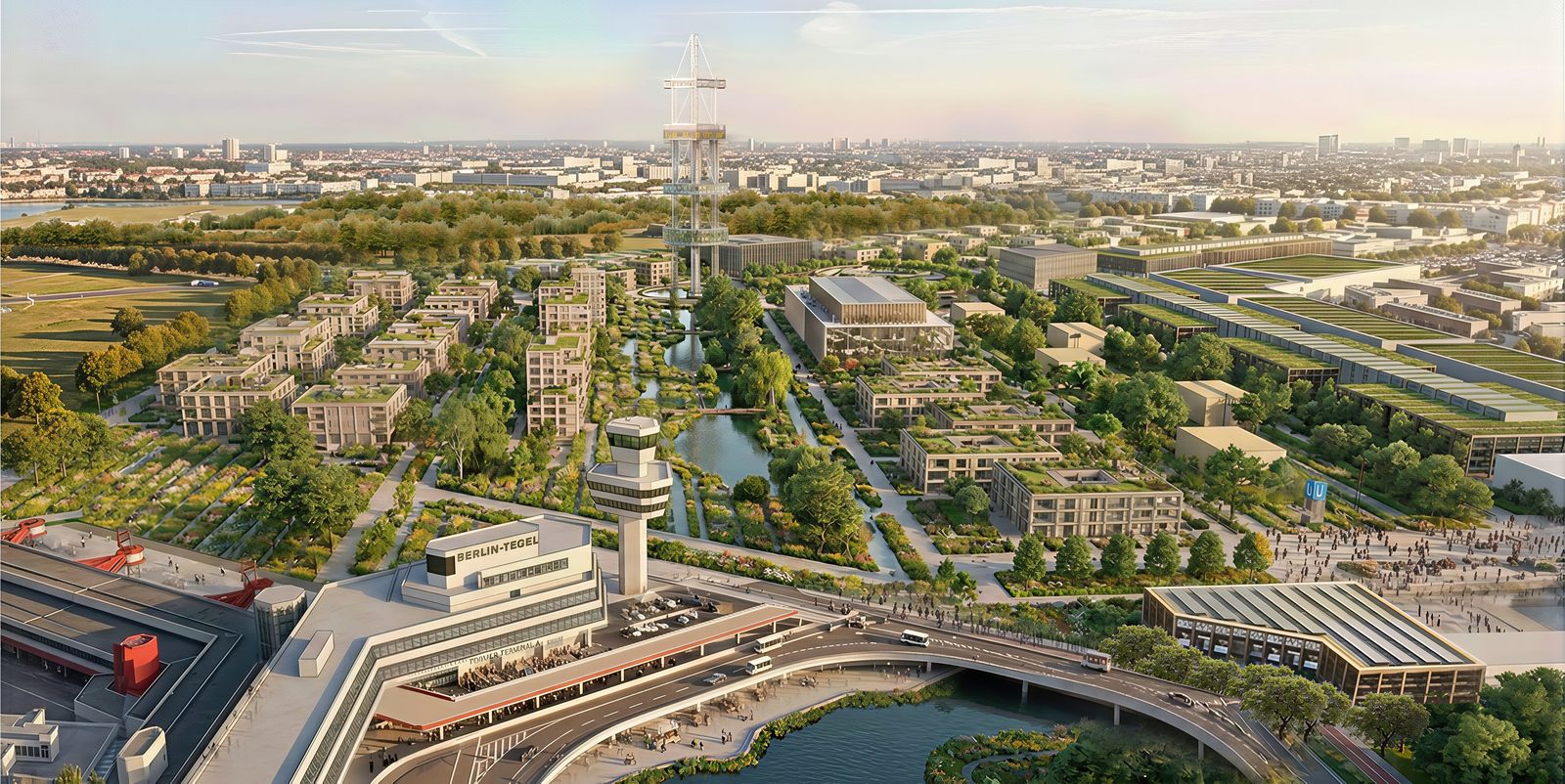
The studies draw on the triangular geometry defined by the airport building as the nucleus and derive from it geometric reference systems that link the campus area with the Kurt-Schumacher-Quartier to create vibrant urban spaces. The Expo Plaza emerges as the central connecting element of the World Expo. In the design, it is bordered by the Arena, the Germany Pavilion, and the Berlin Pavilion, while a slender observation tower with seemingly floating glass rings appears as the landmark of the Expo.
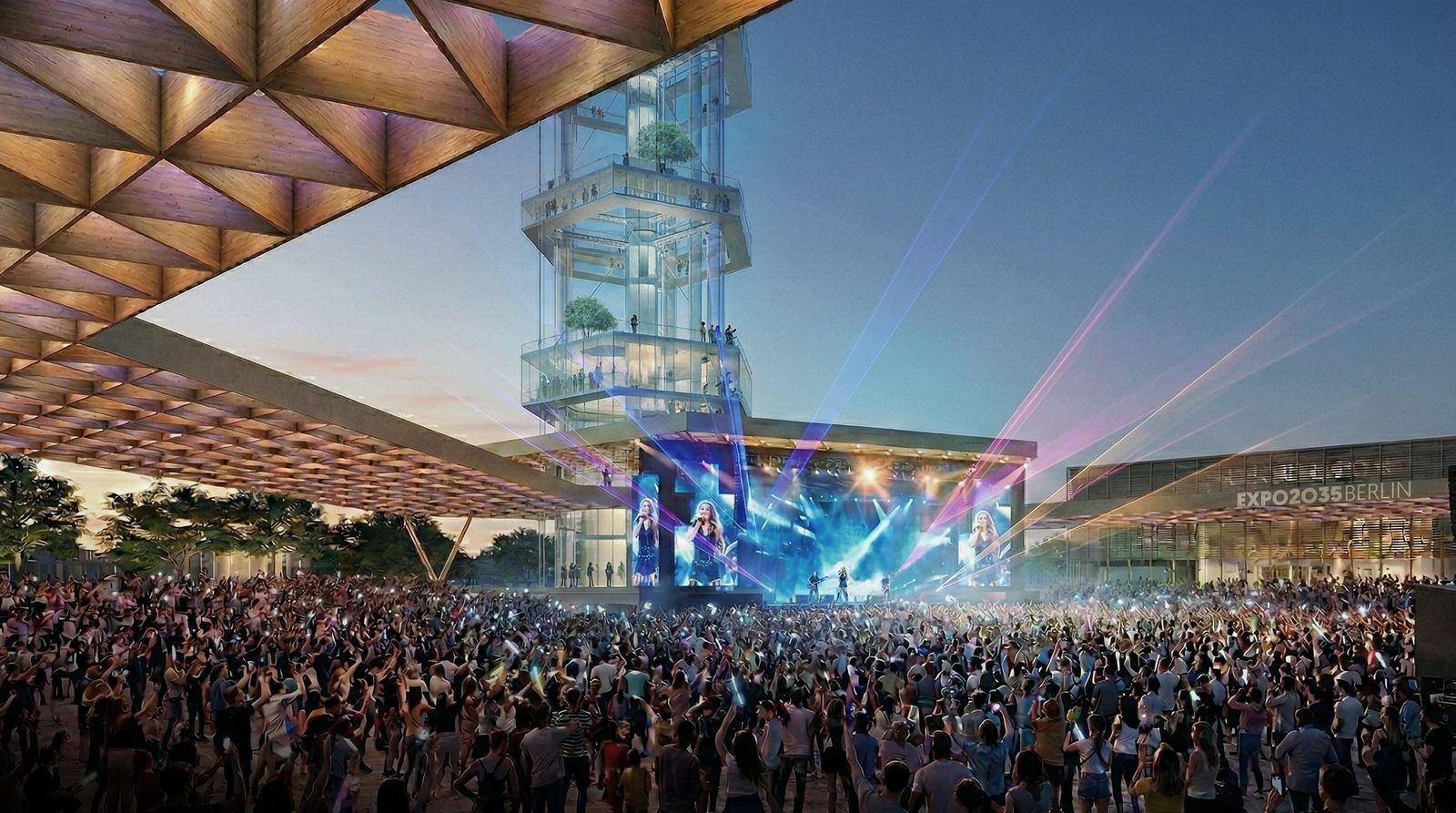
The Urban Tech Republic and the Expo complement each other both thematically and spatially. In this way they create added value for both projects—for Berlin as well as for Germany. At the heart of the joint initiative by gmp and EXPO 2035 Berlin GmbH are innovation, sustainability, and social cohesion as catalysts for the continued development and long-term future use of TXL.
At the same time as this feasibility study, the aac Academy for Architectural Culture, founded by gmp, invited scholarship students from Europe and the Americas to develop concepts and visions for the Expo on the site of the former Tegel Airport. The students’ designs will be presented in exhibitions in both Hamburg and Berlin.
Together, the two projects form a proof of concept: they demonstrate that the Tegel site has the spatial, infrastructural, and economic prerequisites for hosting a World Expo—and that the Expo itself would provide a decisive impetus for the long-term development of the location.
About the Participants
EXPO 2035 Berlin GmbH: Operational unit that prepares the application, bundles projects, and develops formats.
EXPO 2035 Beteiligungsgesellschaft der deutschen Wirtschaft GmbH & Co. KG: Platform for investments from the German economy in the EXPO 2035 initiative. The Berlin Chamber of Commerce and Industry is the first limited partner, investing €250,000.
Global Goals für Berlin e.V.: A non-profit association that aims to work with all Berliners to fully implement the 17 United Nations Sustainable Development Goals by 2035, through large and small projects and initiatives. The association acts as an umbrella organization, collecting these projects, making them visible, and implementing them with the support of stakeholders from civil society, business, science, sports, politics, and administration.
gmp · Architects von Gerkan, Marg and Partners: gmp is an architectural firm founded in Hamburg with offices worldwide. With a generalist approach and over sixty years of experience, projects are realized in dialogue with clients and the planning disciplines involved, on every scale and in every cultural context, in every planning phase and on every continent. The spectrum of projects ranges from residential buildings to high-rise buildings, from stadiums to concert halls, from office buildings to bridges, and from door handles to urban planning. Global challenges and issues such as urbanization, digitalization, and mobility are taken into account, as are climate-friendly construction according to certified standards and building renovation.
