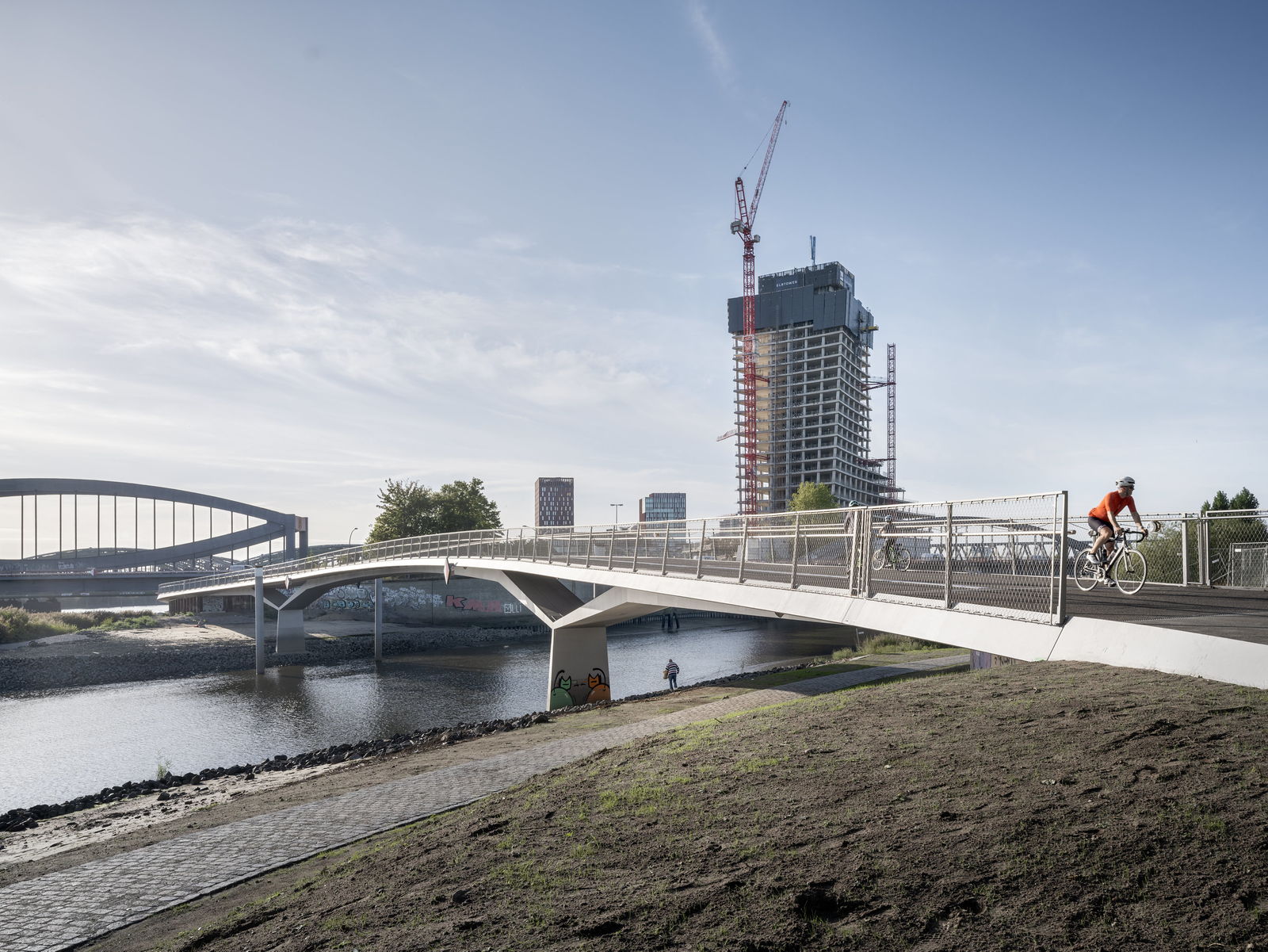
Entenwerder Pedestrian and Bicycle Bridge
Closing an Infrastructure Gap at Hamburg’s Eastern Gateway
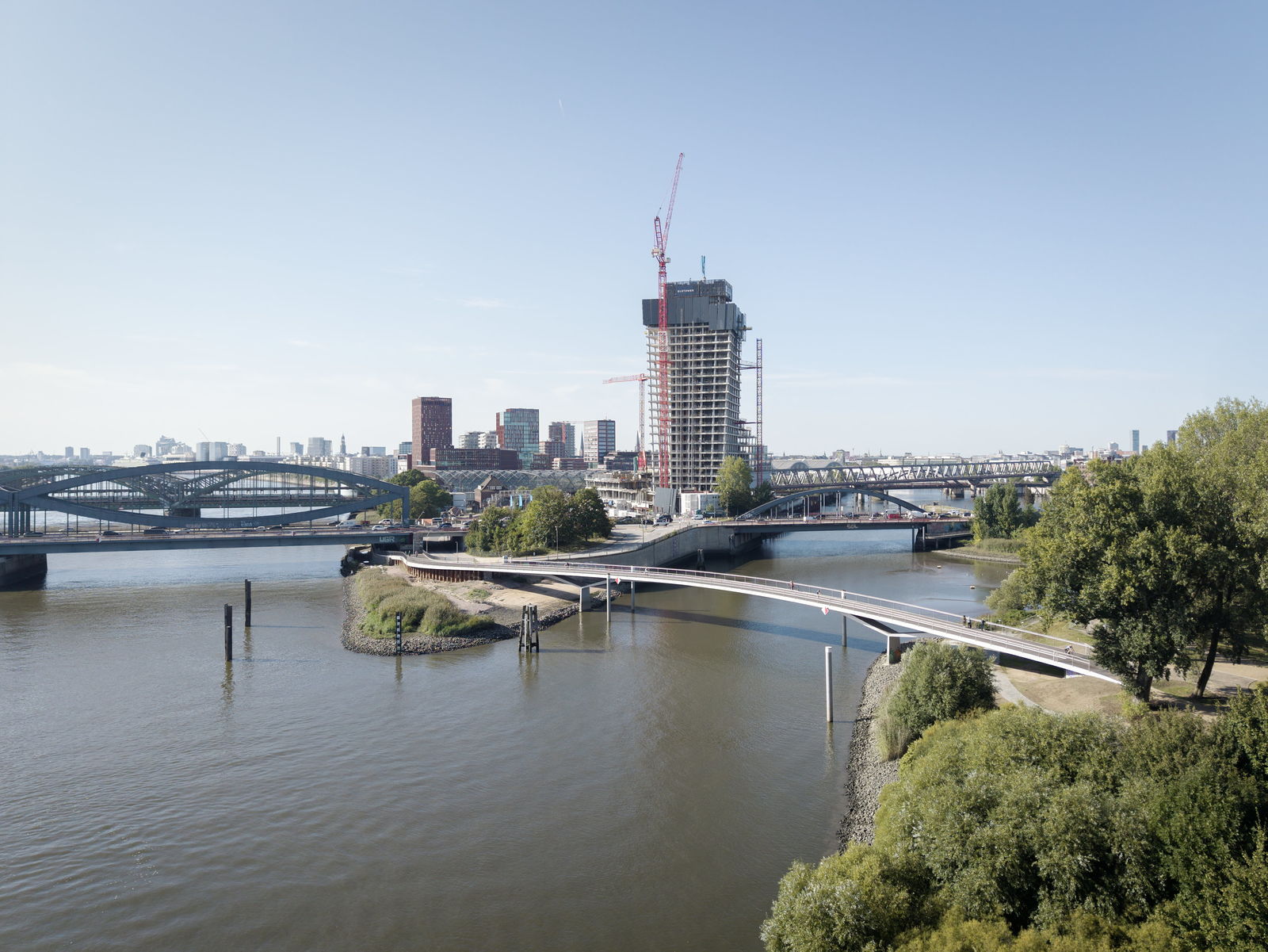
The Entenwerder Pedestrian and Bicycle Bridge creates a new connection for pedestrians and cyclists at Hamburg’s eastern gateway. Designed by the consortium of architects von Gerkan, Marg and Partners (gmp) and schlaich bergermann partner (sbp), the bridge directly connects the Elbbrücken district with the Entenwerder peninsula.
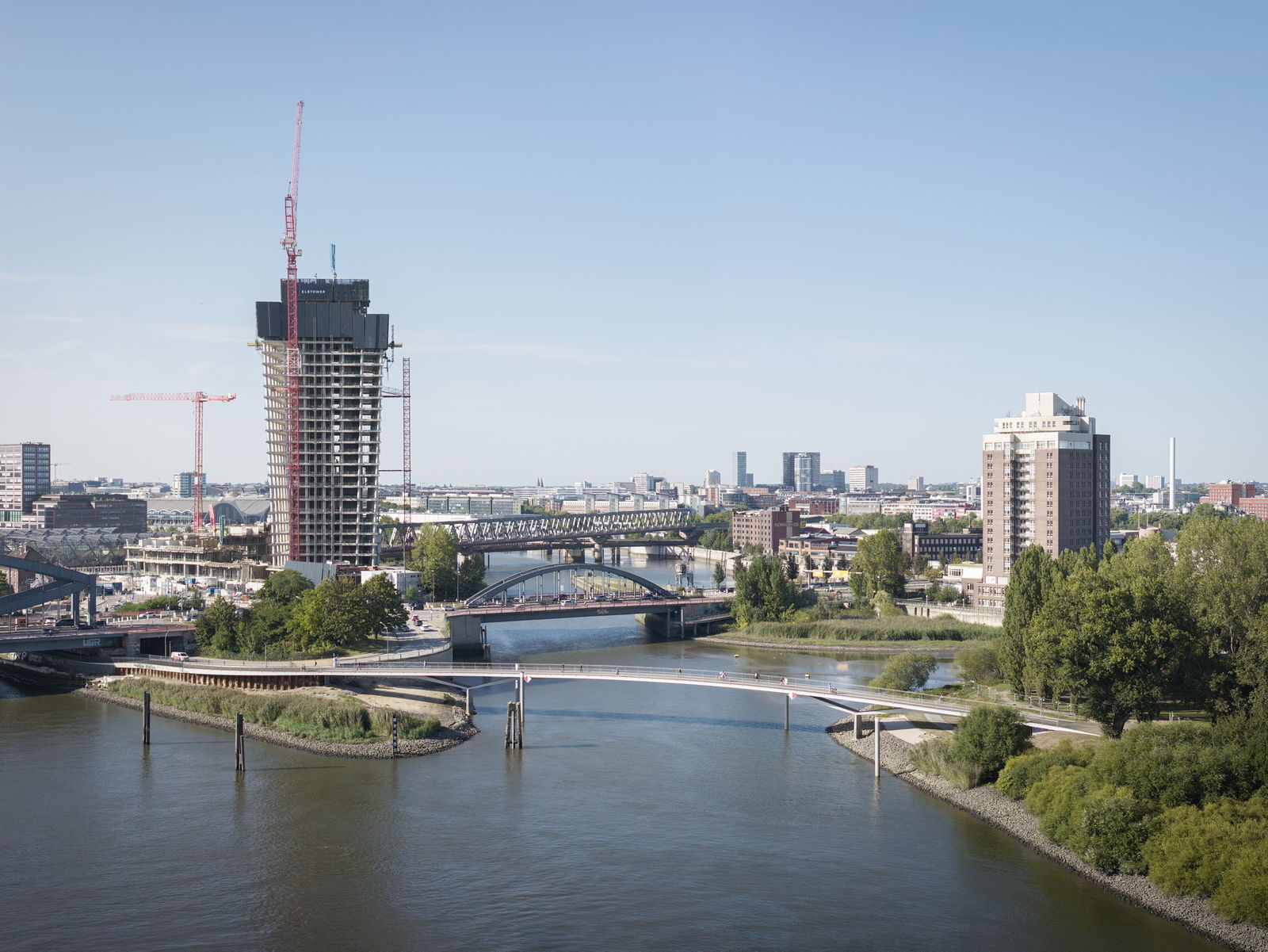
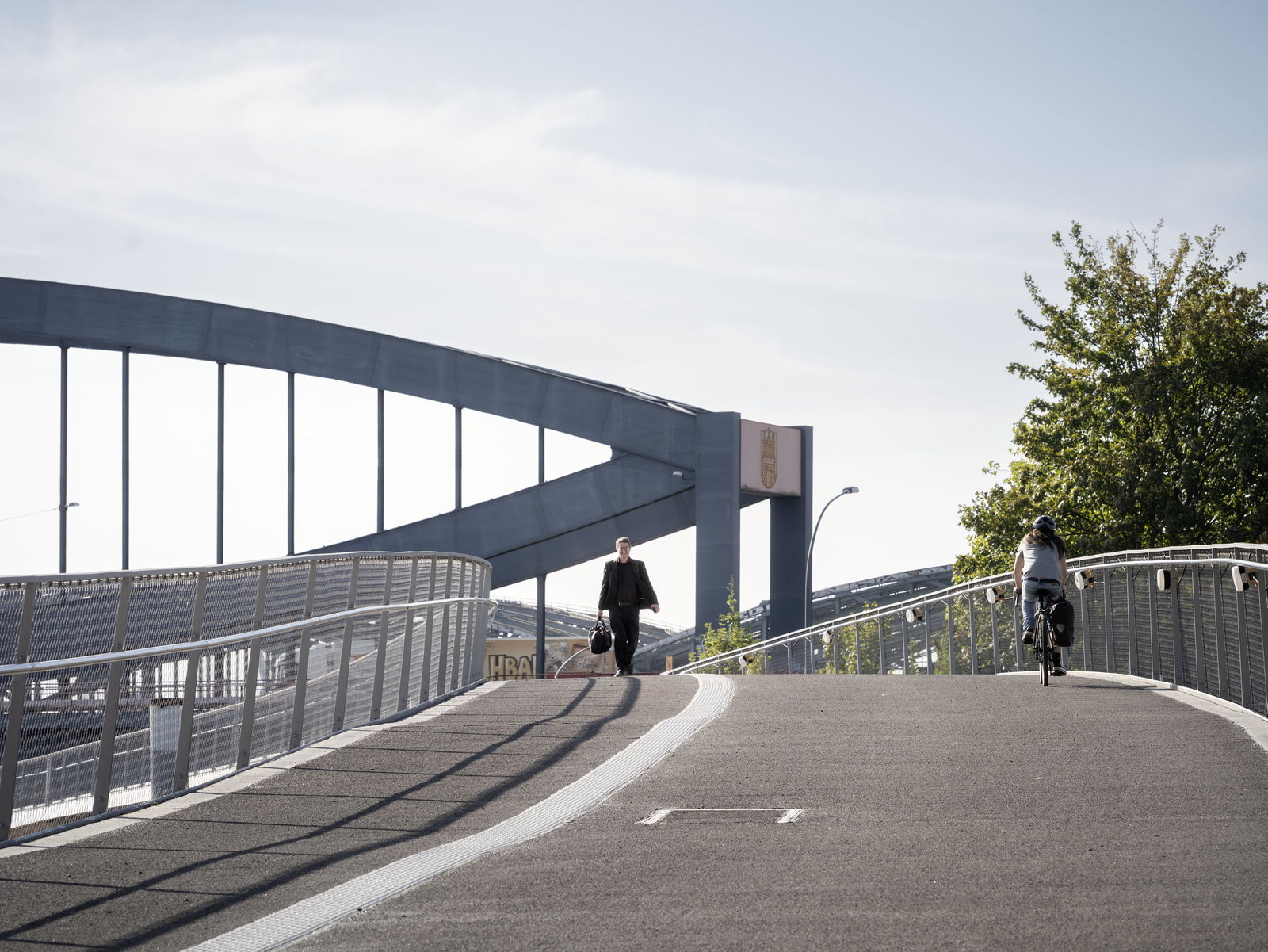
With nearly 2,500 bridges, Hamburg is considered Europe’s bridge capital. As the 520th pedestrian and bicycle bridge in the Hanseatic city’s infrastructure network, the new structure closes a gap along the northern branch of the Elbe that had existed for decades. For the first time since 1943, Rothenburgsort-Süd is once again connected to the subway by a pedestrian route. Furthermore, the project is part of the city’s plans to expand its network of bicycle routes: as part of the cross-region Elbe Cycle Route, the bridge provides a continuous cycling connection from downtown Hamburg to the Vier- und Marschlande area.
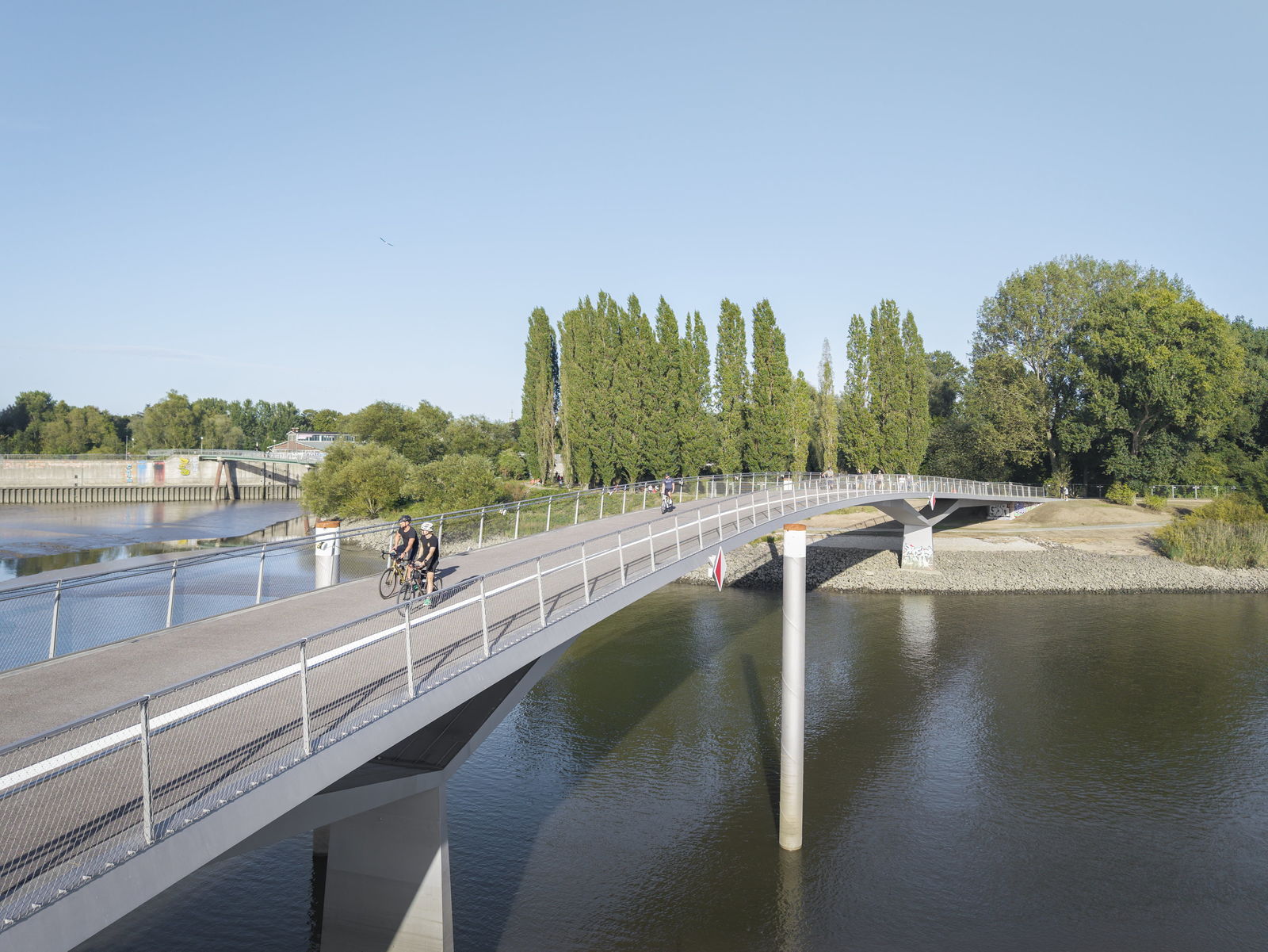
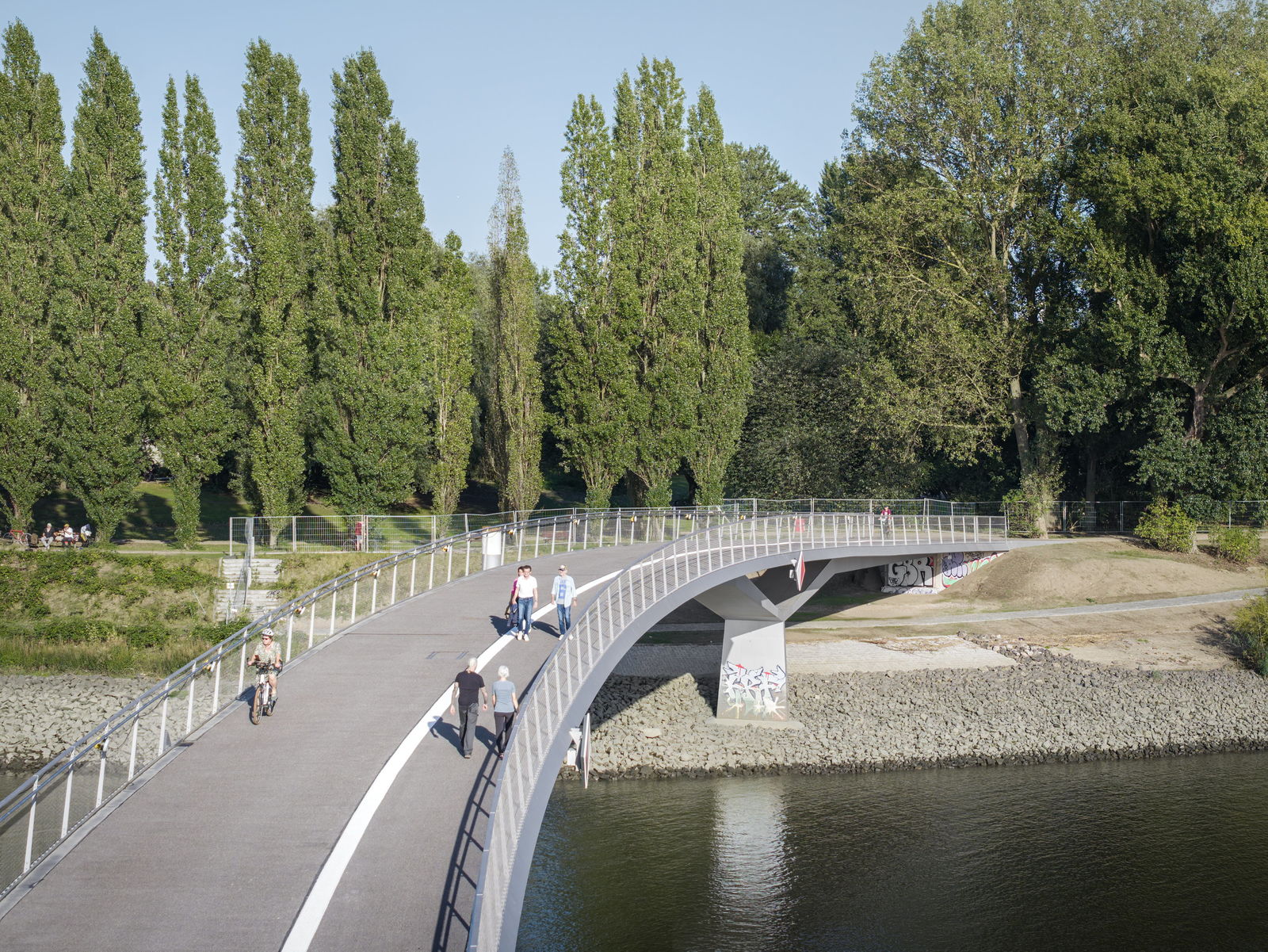
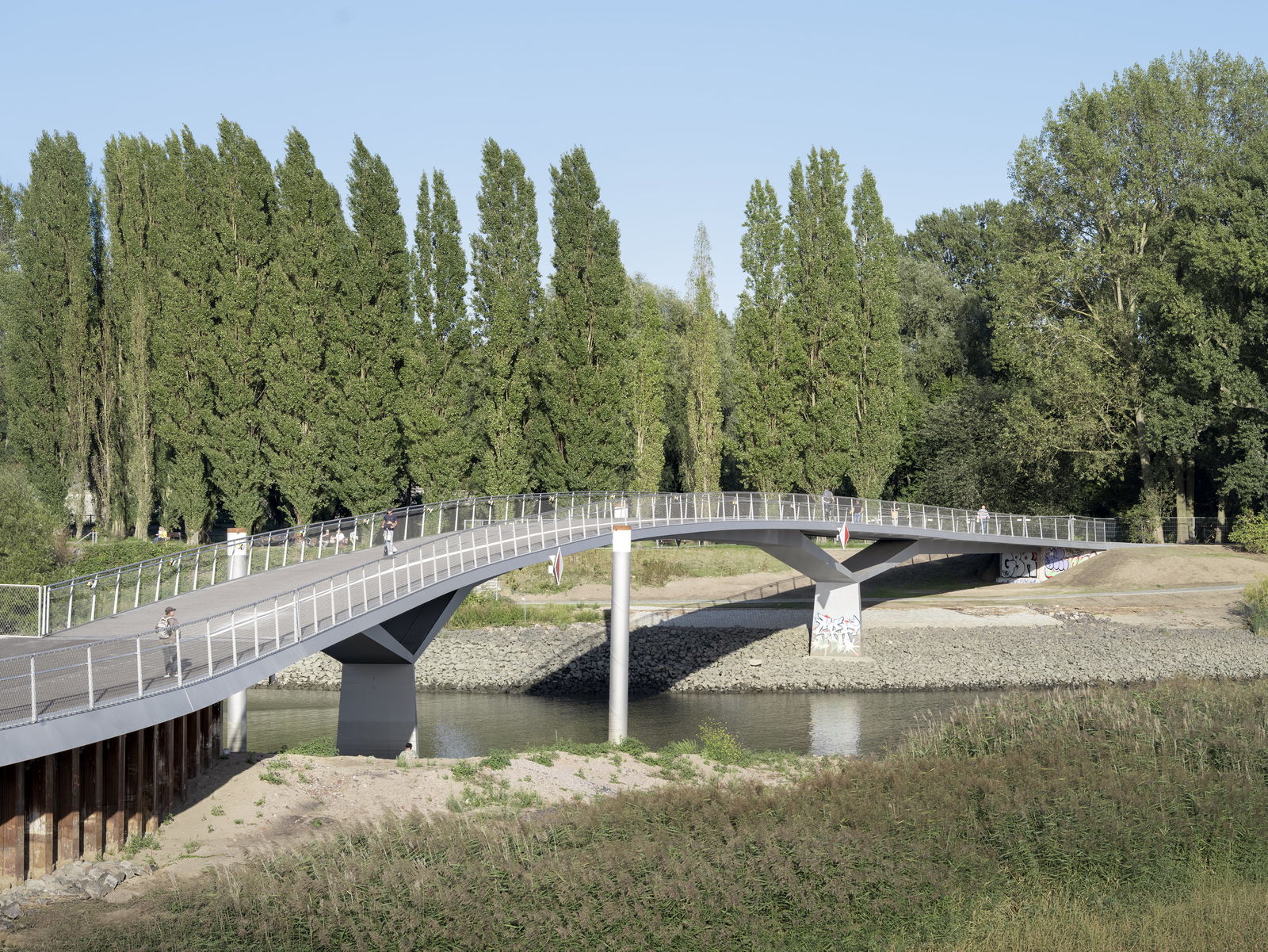
Structurally, the bridge superstructure consists of a hollow steel box girder supported by two slender Y-shaped piers. With an overall length of 135 meters (443 feet), it is Hamburg’s fourth-longest pedestrian and bicycle bridge. At the same time, the 75-meter (246-foot) unsupported span between the two Y-shaped piers is the longest of any bridge in this category within the city. This span ensures unrestricted navigation between the Elbe and the Oberhafen Canal. For assembly and installation, the bridge’s central sections, weighing up to 130 metric tons each, were transported by water to the construction site after being preassembled upstream on the Peute peninsula. A floating crane positioned the components in several stages, taking advantage of the tides to place them precisely on the abutments.
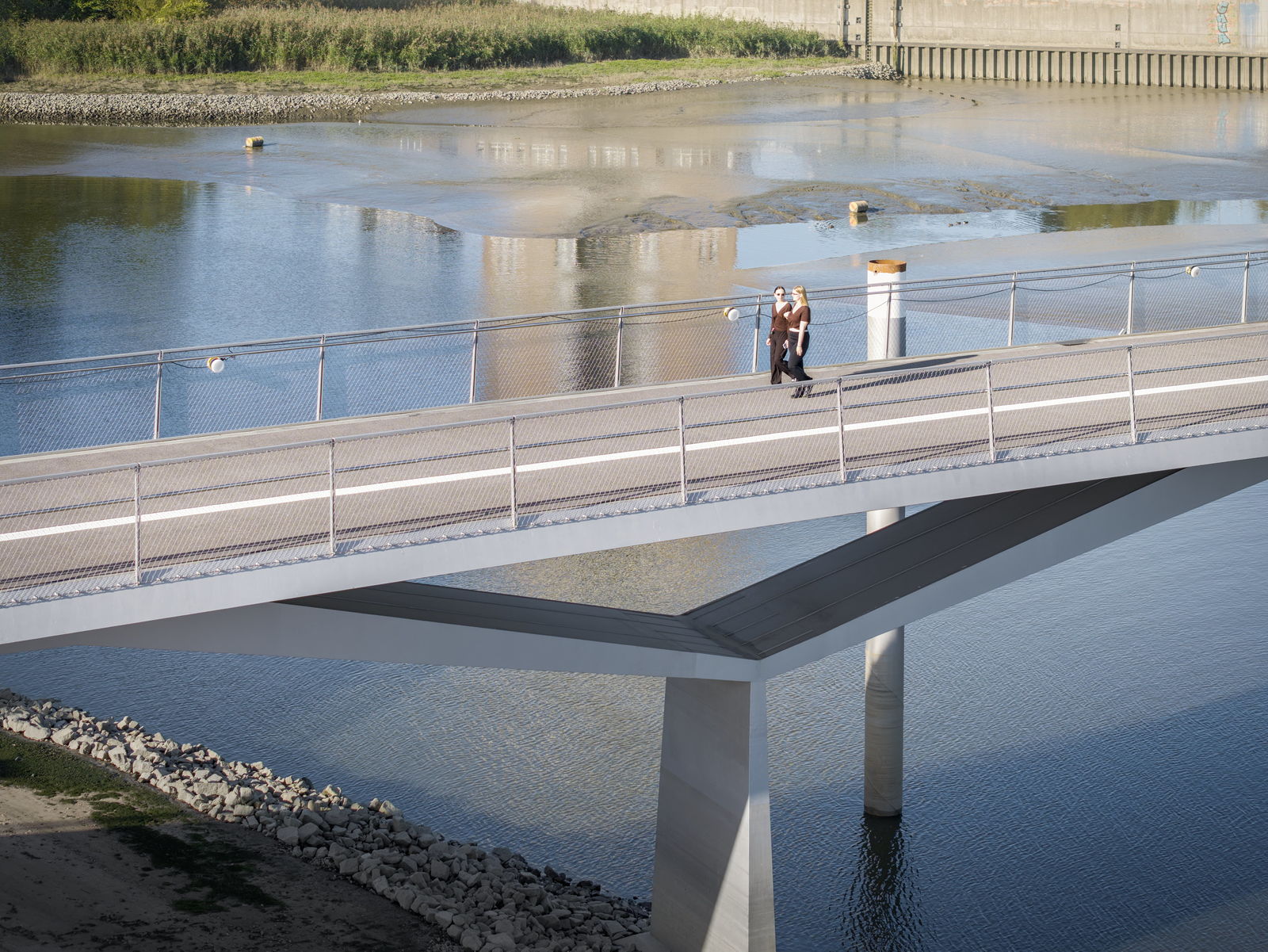
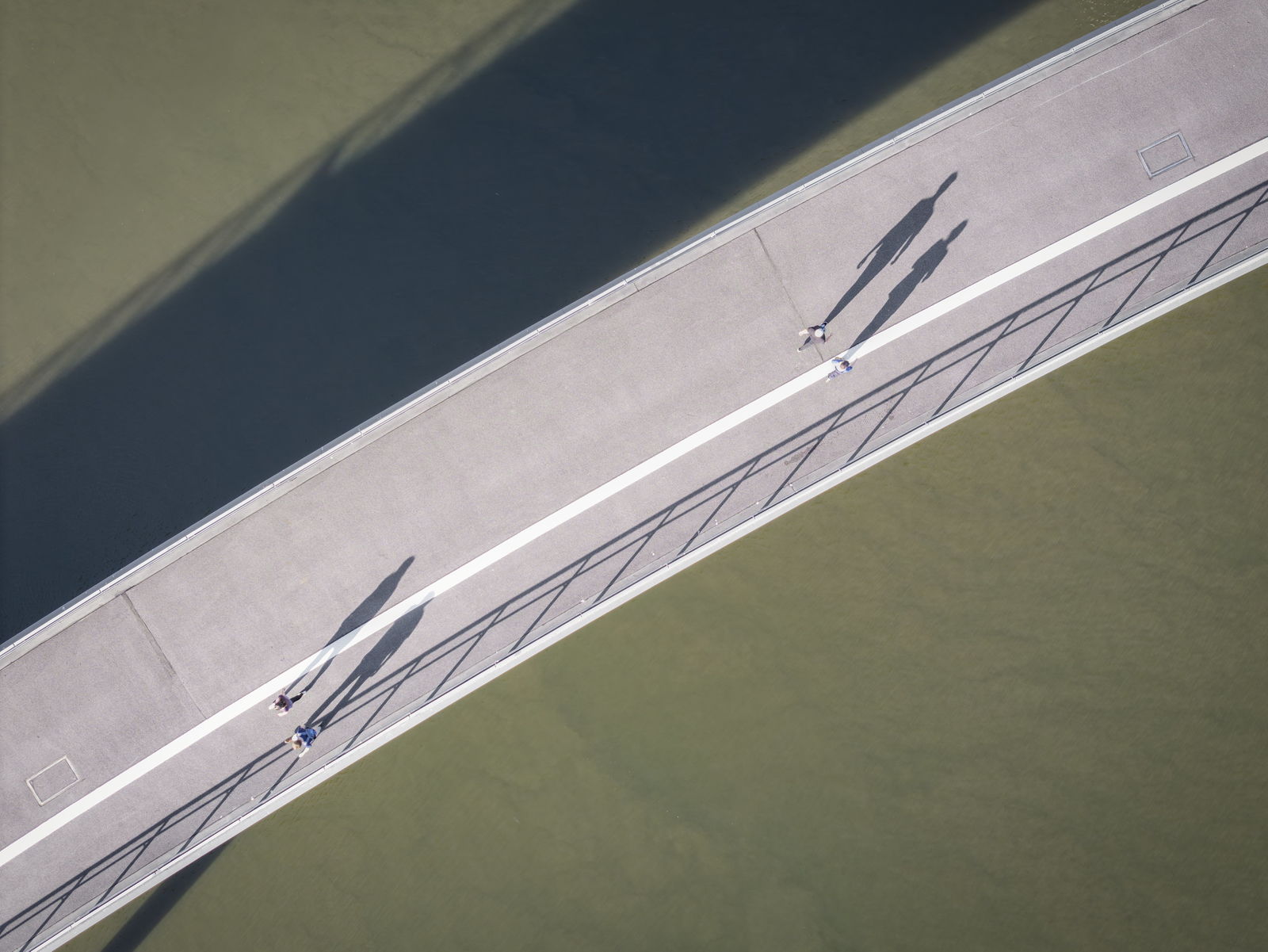
Located directly adjacent to Hamburg’s landmark-protected Elbbrücken bridges, the design by gmp and sbp adopts a restrained silhouette. “With its clear design and pared-down structure, the Entenwerder Bridge meets both the urban design and functional requirements of this location,” explains Andreas Weihnacht, project manager at gmp. “Its gently curving alignment creates a natural connection with the existing pathways in the two adjacent districts.”
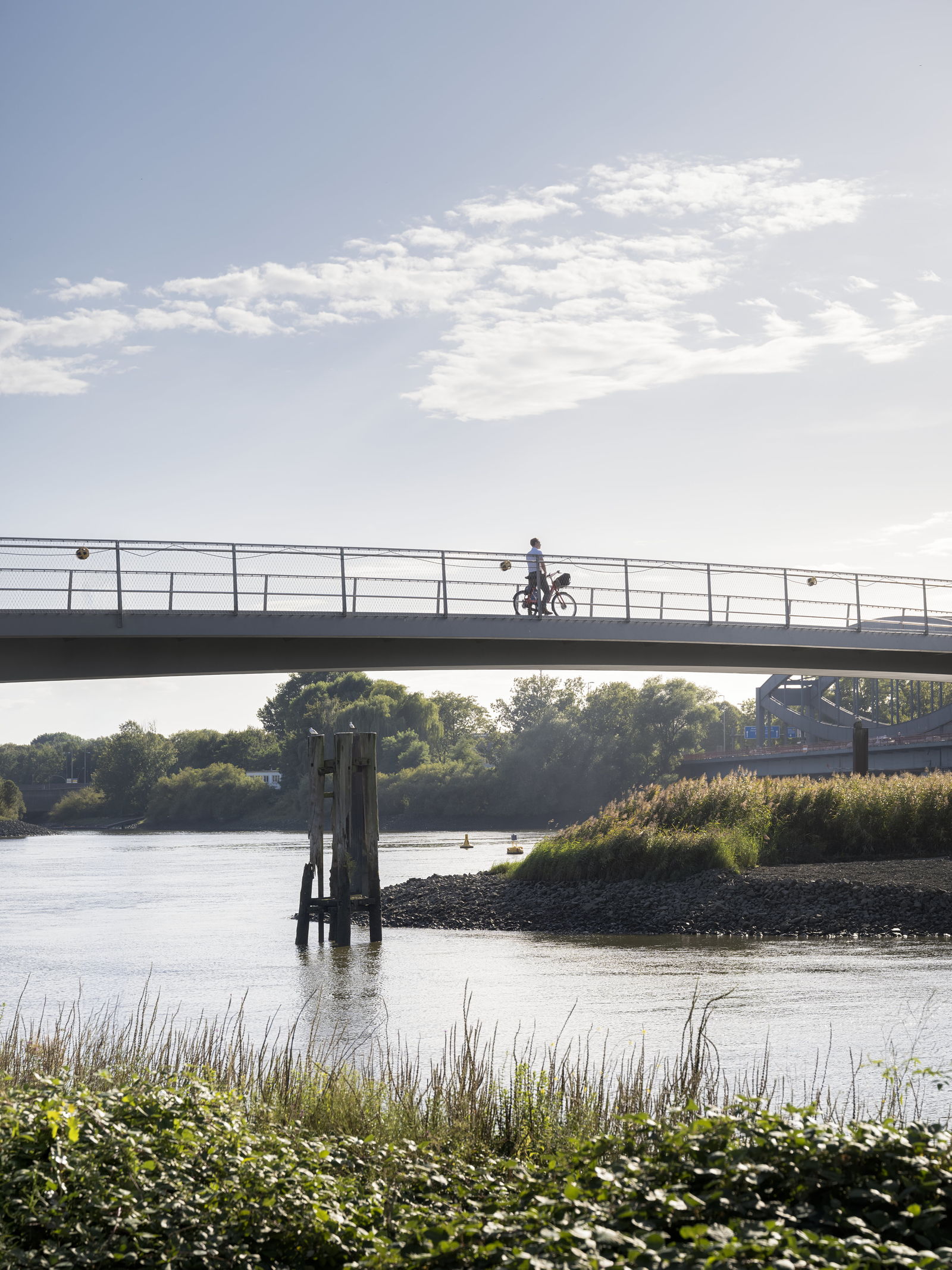
The landscape design is an integral part of the overall concept. In the future, the new “Park Zweibrücken” will be created near the Elbbrücken, with seventy newly planted trees. On the Entenwerder peninsula, the temporary construction areas within Elbpark will be restored to a natural state, and the embankments will be adapted to the new pathway layout. The city is also widening the section of the path between the bridge and Alexandrastieg from 3 to 4 meters (approximately 10 to 13 feet). The park’s existing character, defined by its landscaped and open green spaces, will be preserved.