Concert Hall at Kiel Castle
Renovation and Conversion into a Contemporary Orchestral Hall
The Concert Hall at Kiel Castle exemplifies the challenges faced by many cultural buildings of the post-war modern era, which today require functional and technical renewal while preserving their architectural identity. Between 2019 and 2025, a design team comprising gmp · Architects von Gerkan, Marg and Partners and bbp : architekten developed the project as a conceptual continuation of the existing building. The aim of the design was to integrate a wide range of new requirements into an existing structure whose quality derives largely from the clarity and formal restraint of its architecture.
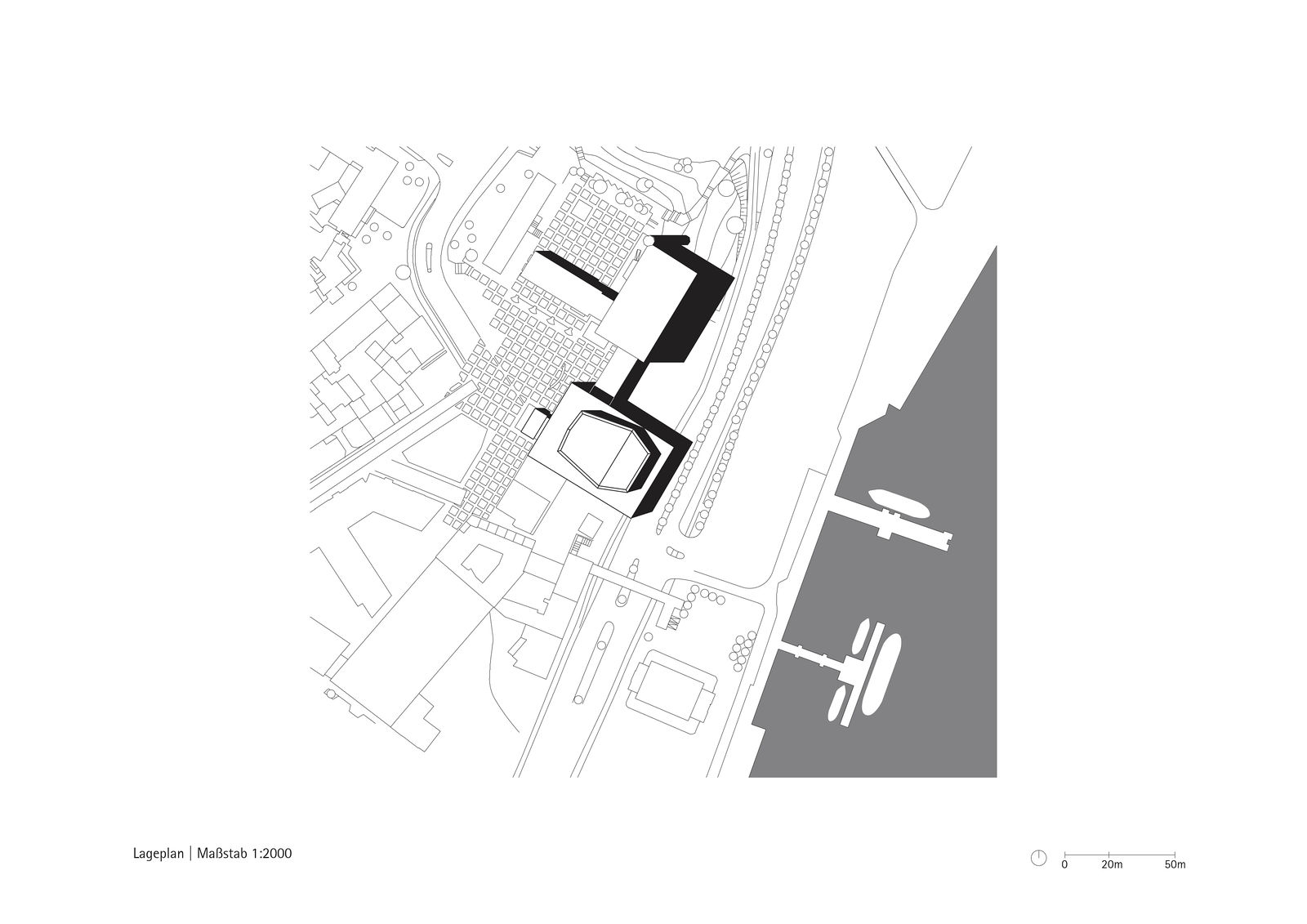
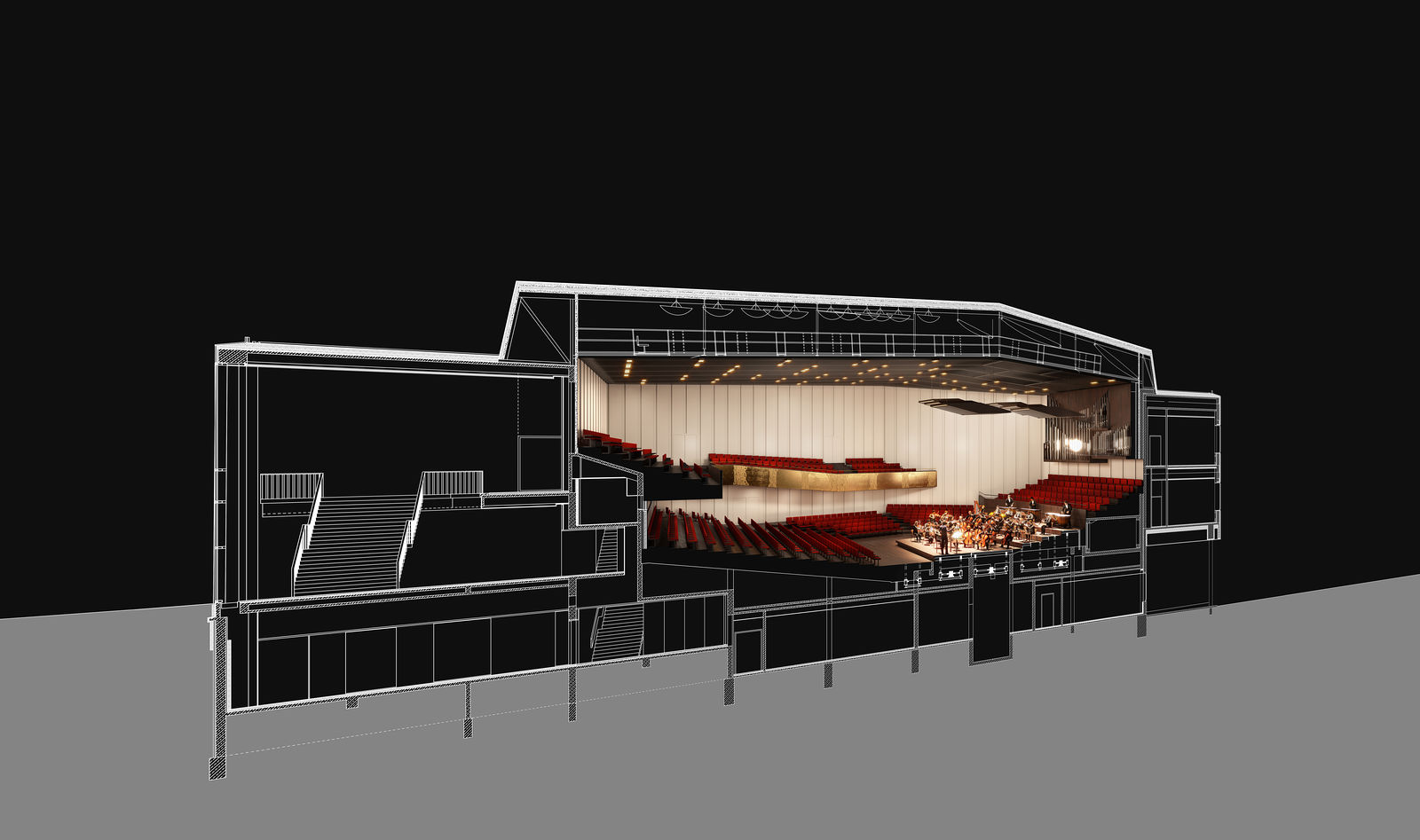
The concert hall was built between 1961 and 1965 based on designs by the Hamburg architecture firm Sprotte & Neve. Together with the adjacent Kiel Castle it formed a new cultural center on the northern edge of Kiel’s historic old town. Enclosing a bright, prismatically shaped auditorium within its natural stone volume, the building was originally conceived as a multifunctional venue, with the Philharmonic Orchestra of Kiel as its primary user. The auditorium, with its centrally located, nearly level orchestra platform, is surrounded by tiered audience terraces, creating a close spatial relationship between orchestra and audience. Subsequent conversions, technical upgrades, and additions gradually altered the building’s architectural character and overlaid key elements of the original design.
The core objective of the conversion was to restore the building’s minimalist clarity and materiality while integrating contemporary technology. Nearly sixty years after its completion, age-related deficiencies, damage from earlier repairs, and increased operational demands made comprehensive renovation and upgrade unavoidable. A guiding principle of the project was the greatest possible preservation of the original fabric. Over the decades, the space—initially used as a multifunctional hall—had evolved into a dedicated concert hall with specific acoustic and technical requirements, which are now fully addressed. The design strategy relied on precise interventions, both visible and concealed, correcting later alterations as well as minor shortcomings in the original construction. This approach re-establishes the architectural order while optimizing functional flows for audiences, musicians, and operations. From an urban design perspective, the concert hall has also been opened up more toward the city and the Förde.
The energy-efficient renewal of the entire building envelope was a central focus of the conversion and renovation. The energy-optimized post-and-beam glass façade of the foyer reflects the delicate proportions of the original structure and enhances transparency along the main façade. New solar-control glazing improves energy performance and summer heat protection. The natural stone façades and foyer walls clad in Norwegian Alta quartzite were also restored, with approximately 70 percent of the interior and exterior stone panels retained and reused. The removal of the former cast bronze doors visually opens the entrance area toward the forecourt.
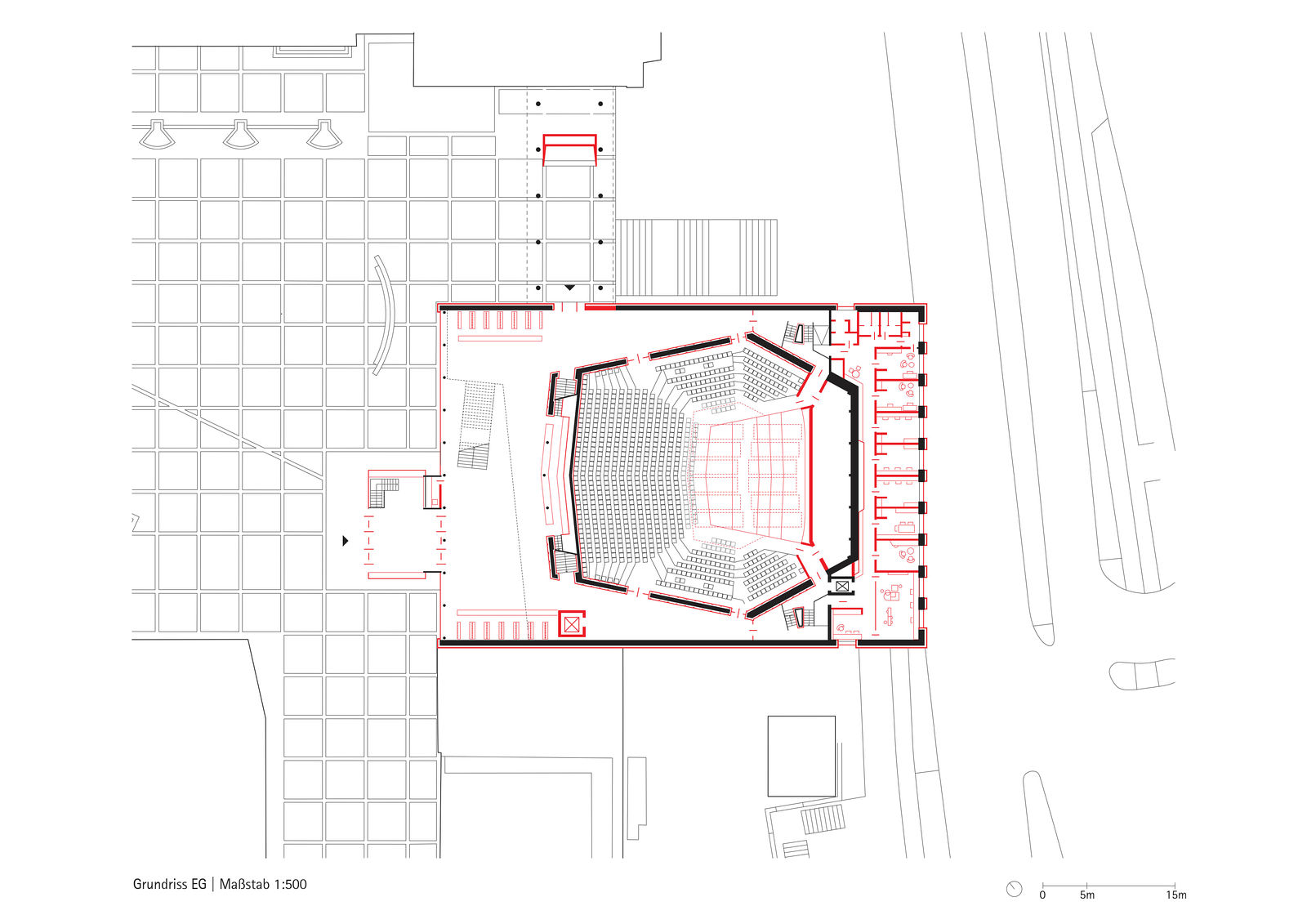
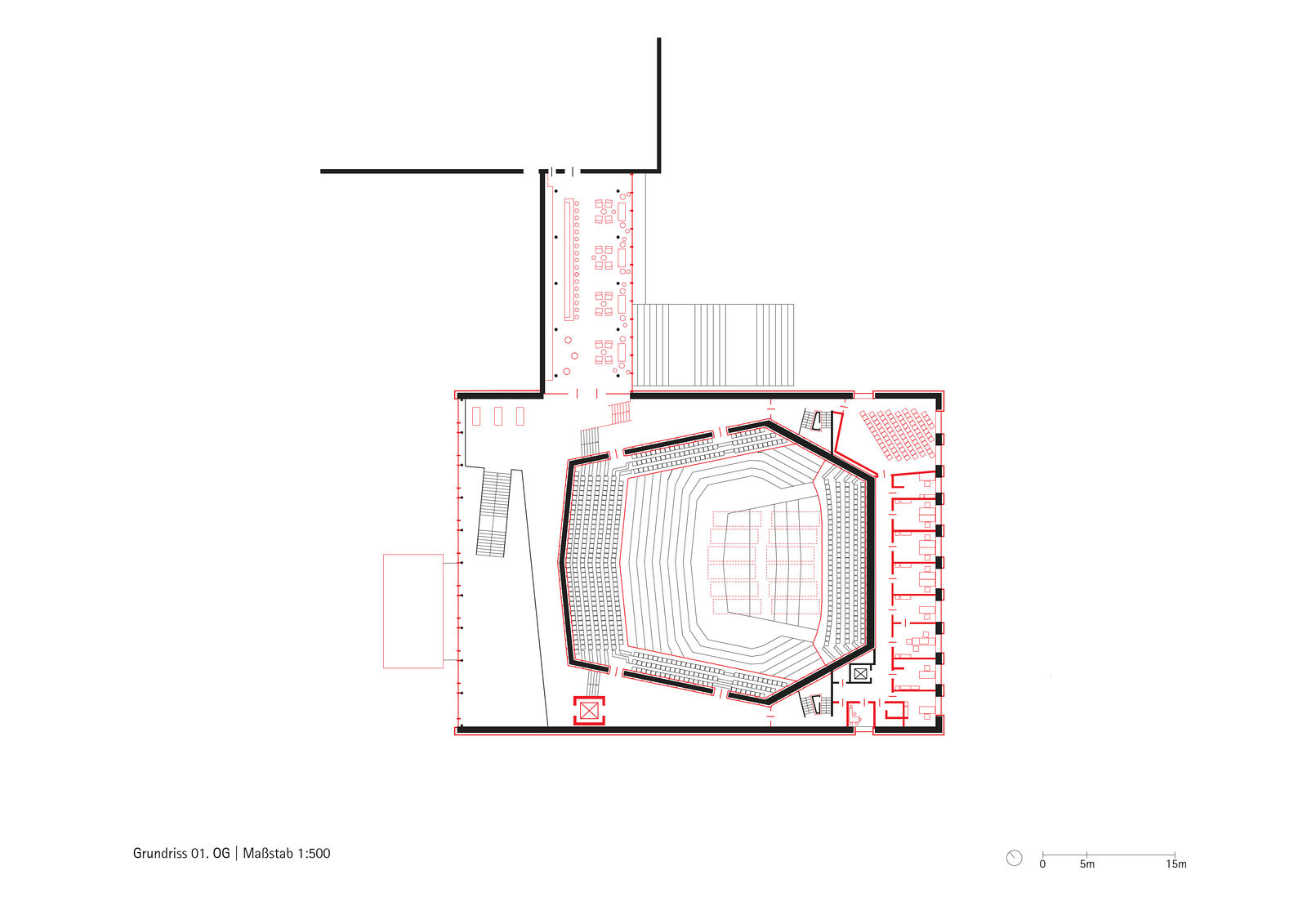
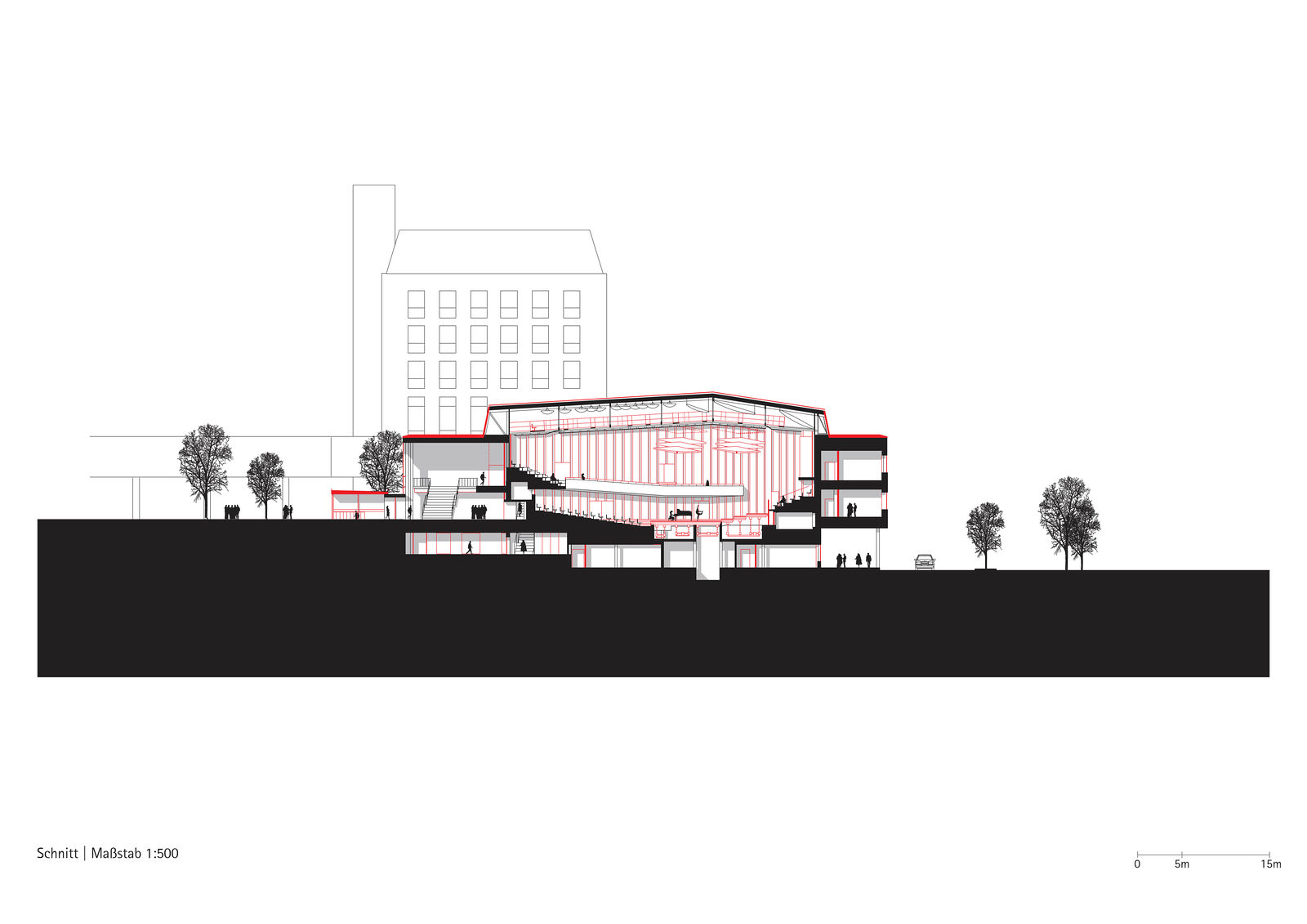
Drawing on many years of operational experience, the foyer interventions focused on functional improvements. By switching the locations of the bar and coat check, acoustic disturbances were reduced and circulation for both visitors and staff was reorganized. The elevator providing access to the upper tier, previously added in front of the south façade, was removed and integrated into the foyer. Another key objective was strengthening the building’s connection to the Kieler Förde. A new exit from the foyer now opens northward onto the Förde Terrace. Access to the upper-level Förde Foyer, oriented toward the water, was significantly expanded. A newly integrated bar enhances the Förde Foyer, establishing it as a space for social interaction and communication. In addition, the provision of a grand piano opens the space to informal musical uses beyond the regular concert program. The building’s range of uses is expanded by a new multifunctional hall on the upper floor, which also offers views of the Kieler Förde. As part of the new interior design, lighting fixtures from the concert hall were reused. The lighting concept continues the idea of the glowing auditorium volume, with LED backlighting of Corian panels complementing the existing lighting.
In the concert hall itself, interventions focused on acoustics, the stage, and technical equipment. While the hall’s excellent concert acoustics were preserved, the audibility among orchestra members was specifically improved. Twelve height-adjustable acoustic reflectors above the stage enhance musicians’ communication through new sound-reflecting surfaces while integrating acoustics, stage lighting, and technical equipment. New lifting platforms replace the former manually operated stage elements, enabling faster changeovers and more flexible use of the hall. Modifications to selected terrace areas improve sightlines within the auditorium.
The character of the hall is retained through the refurbishment of the seating, flooring, and stair railings, while functional requirements are implemented in a contemporary manner. The material palette of the existing fabric was reduced, with new components added in black steel and perforated cladding. Building services were completely renewed. In addition, barrier-free accessibility measures were expanded: new vestibule doors and an elevator integrated into the building volume replace earlier additions and reorganize the building’s overall massing.